
Last updated September 10, 2026
Level 1 sweep and inspection to the NFPA 211 annual standard - flue, crown, cap, and flashing checked and photographed
Chimney sweep logs do not sweep chimneys. They loosen some creosote - which then falls where a brush and vacuum still have to collect it.
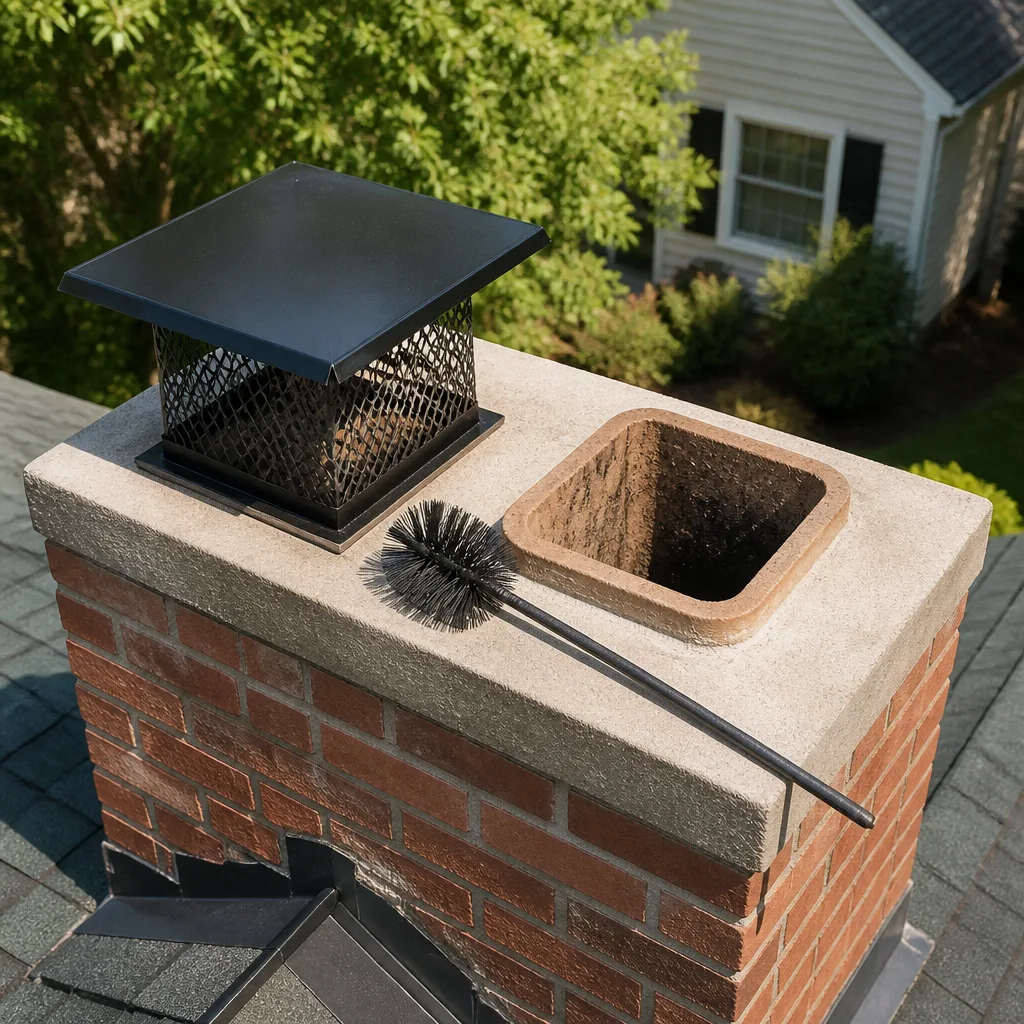
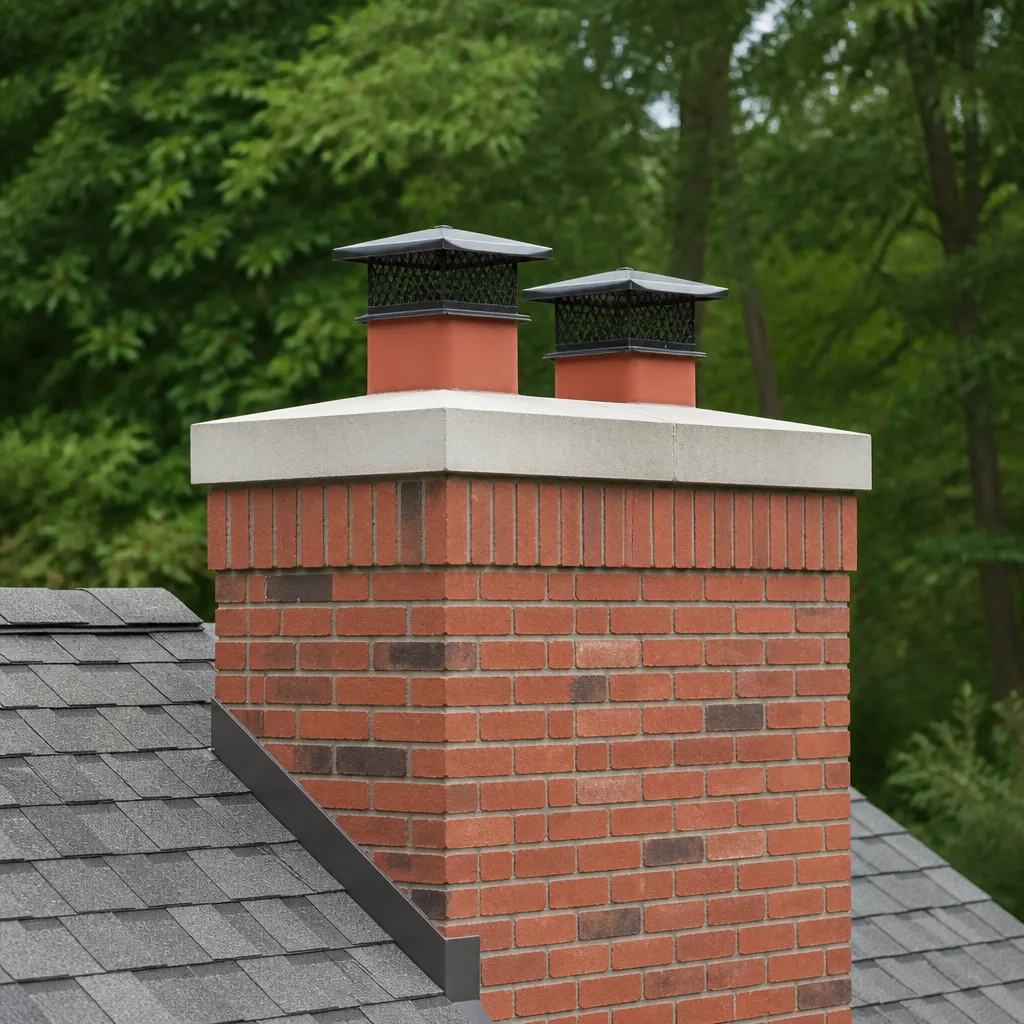
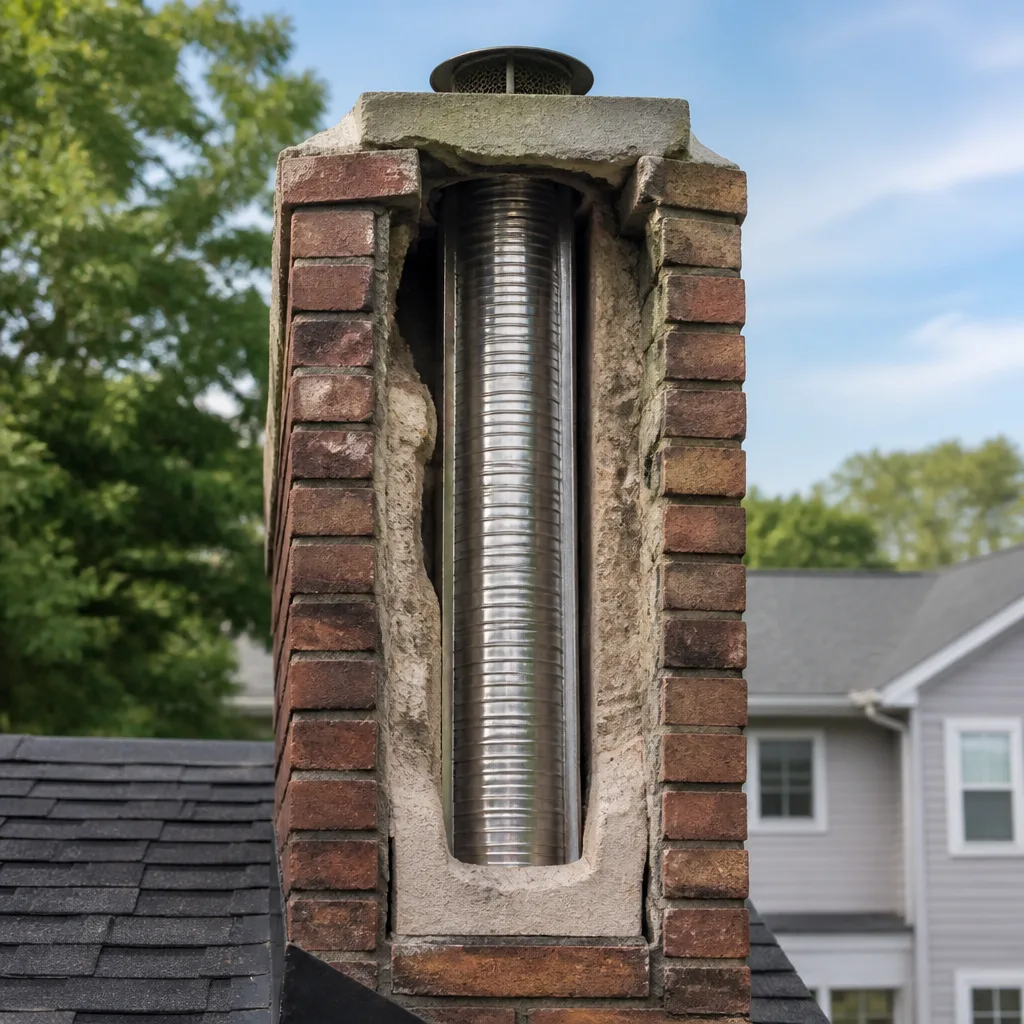
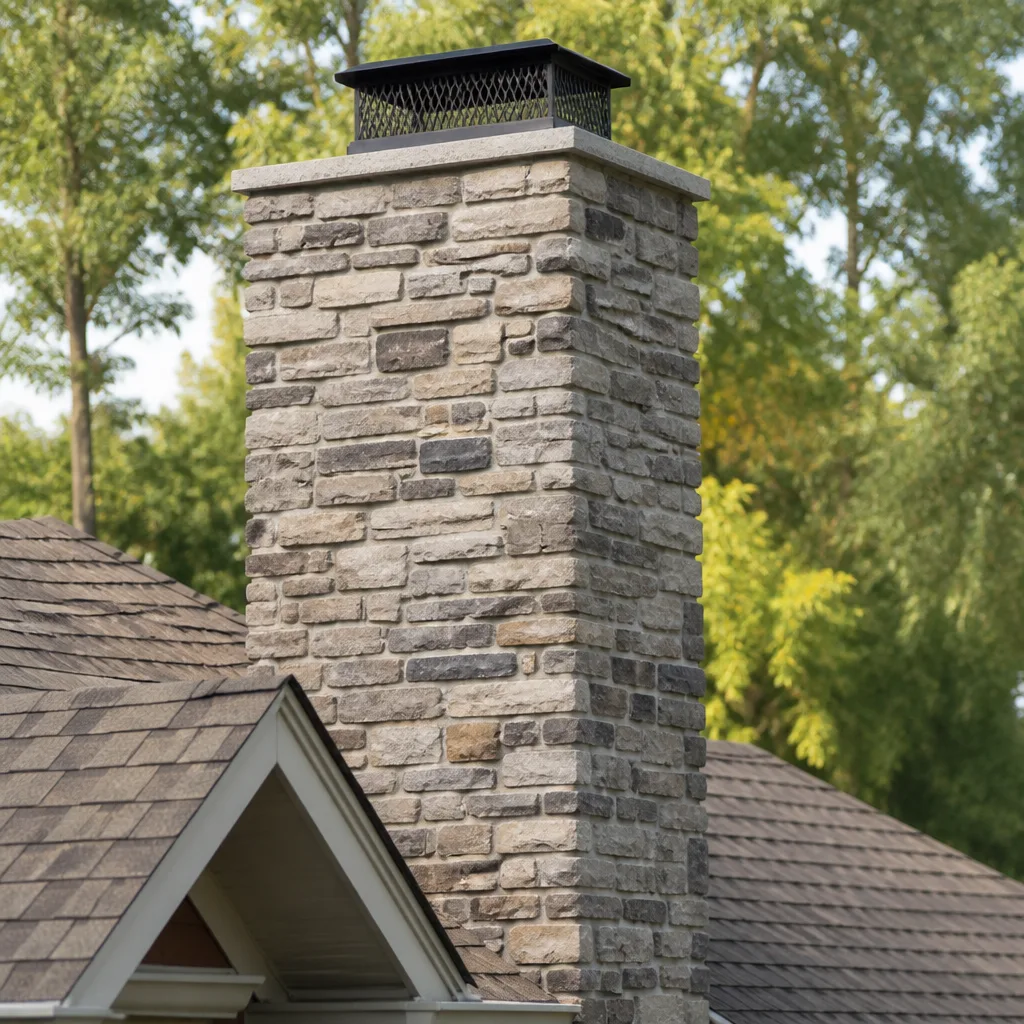
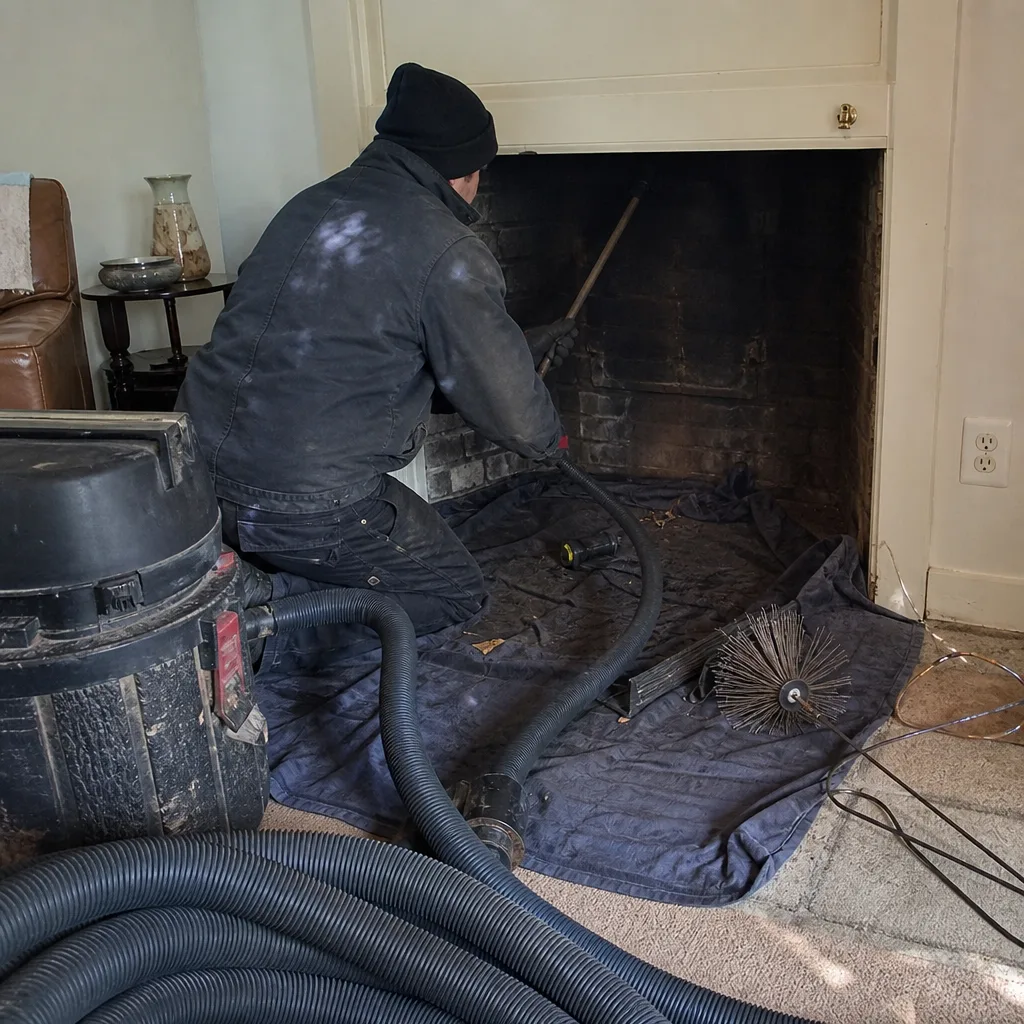 Before
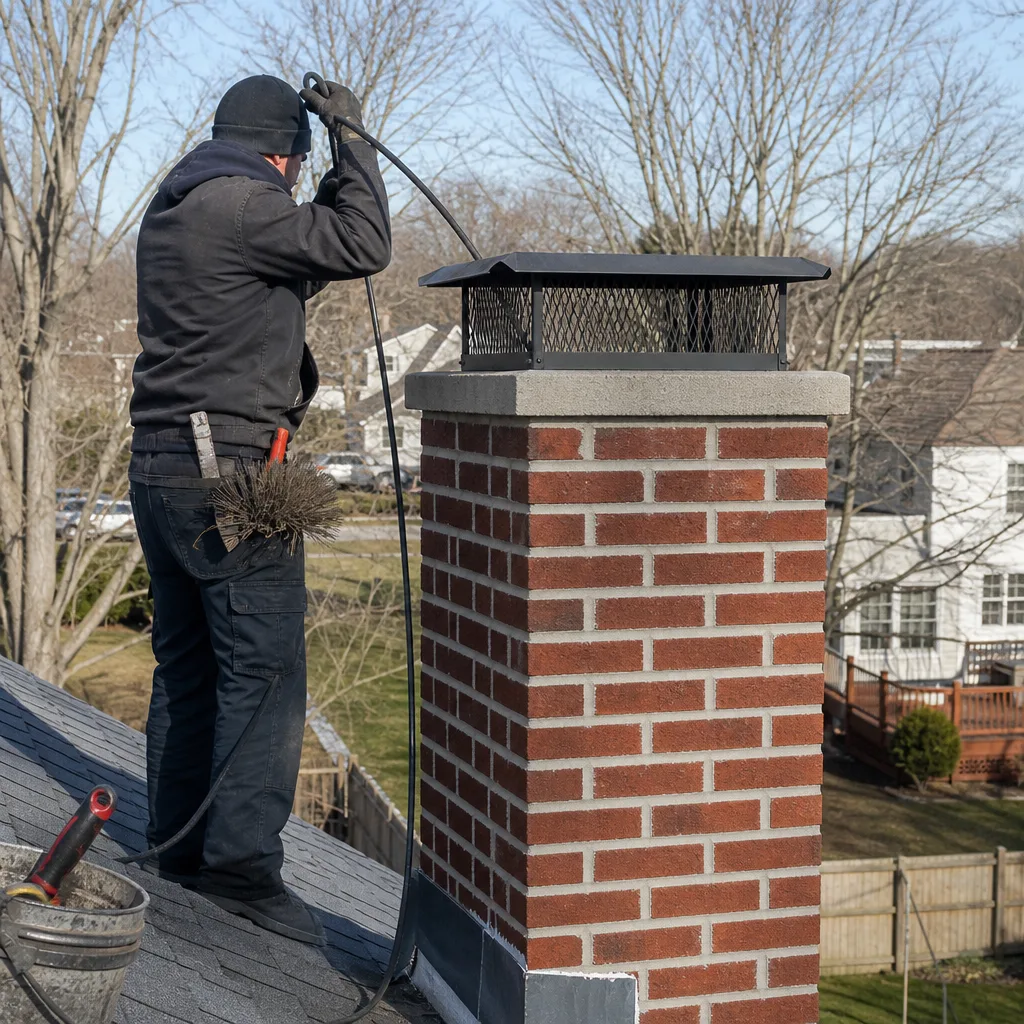 After
After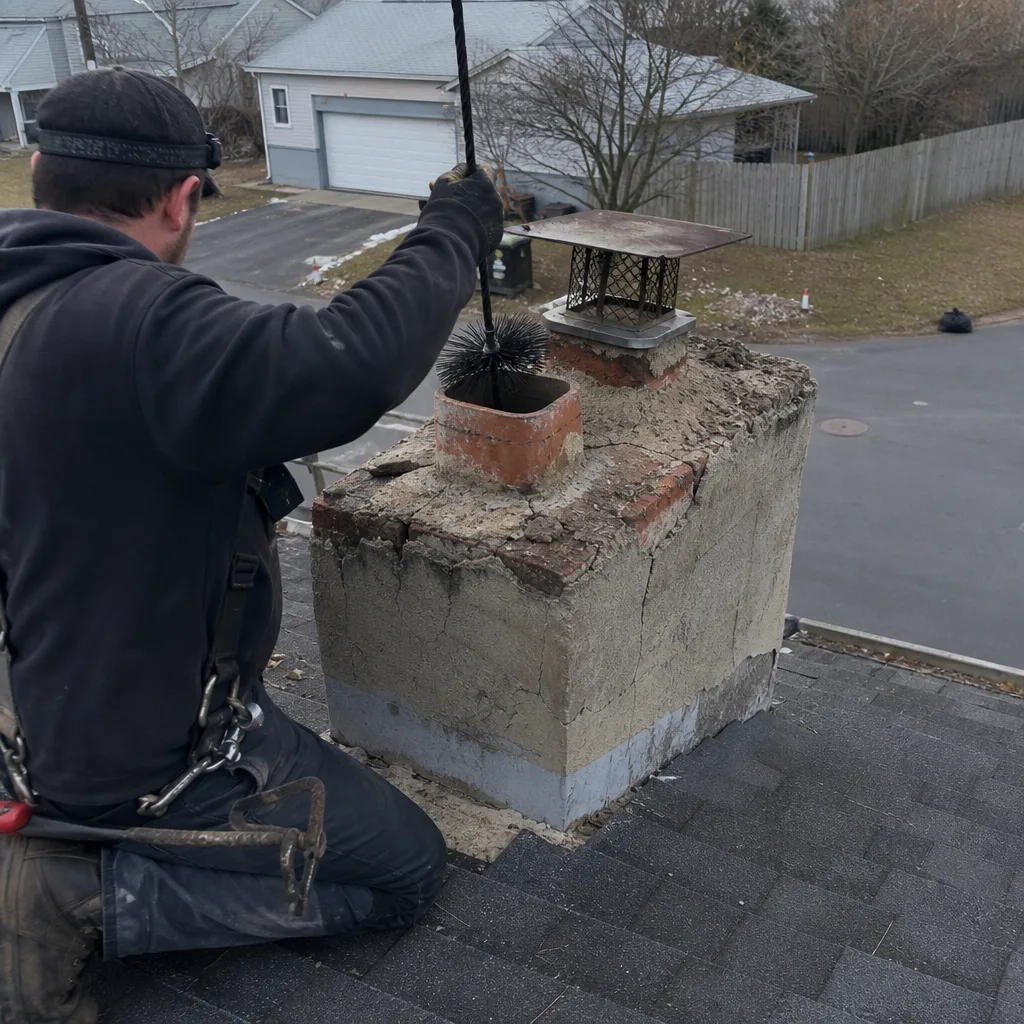 Before
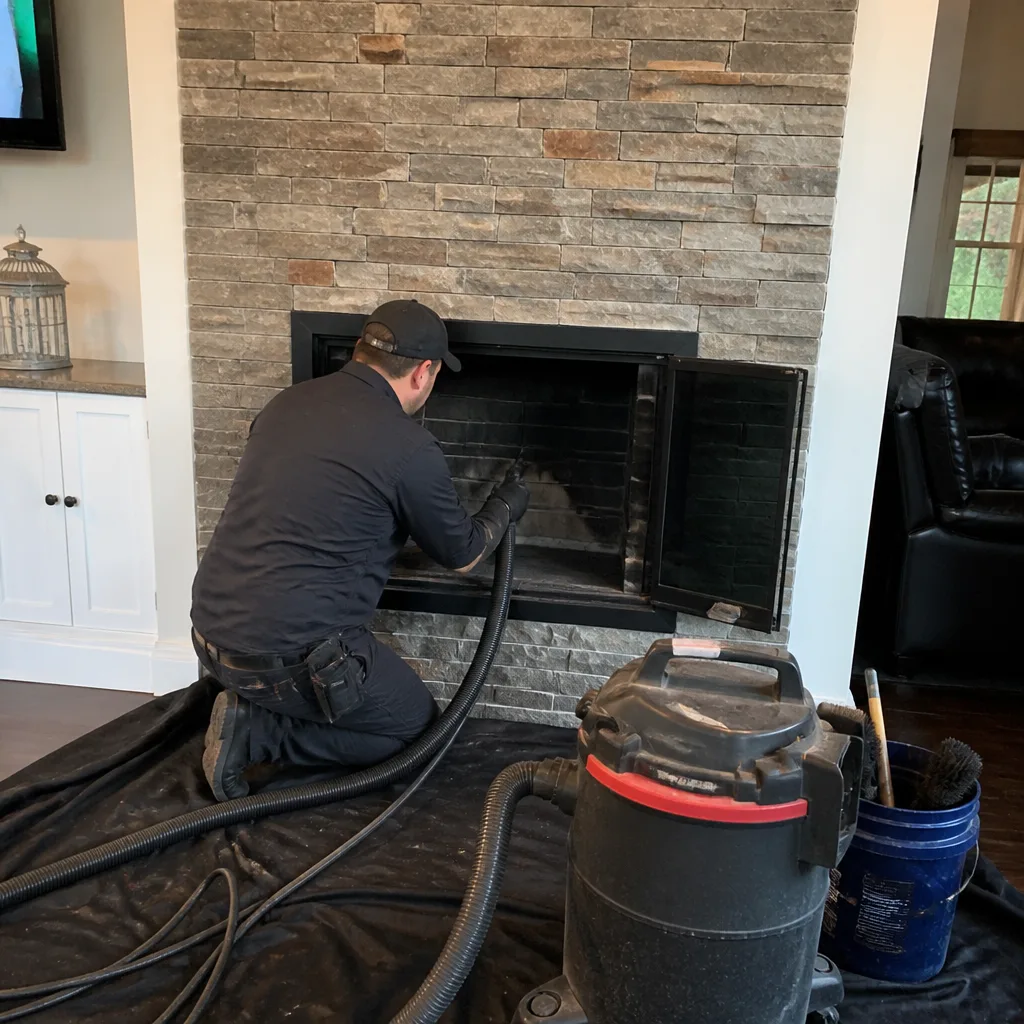 After
After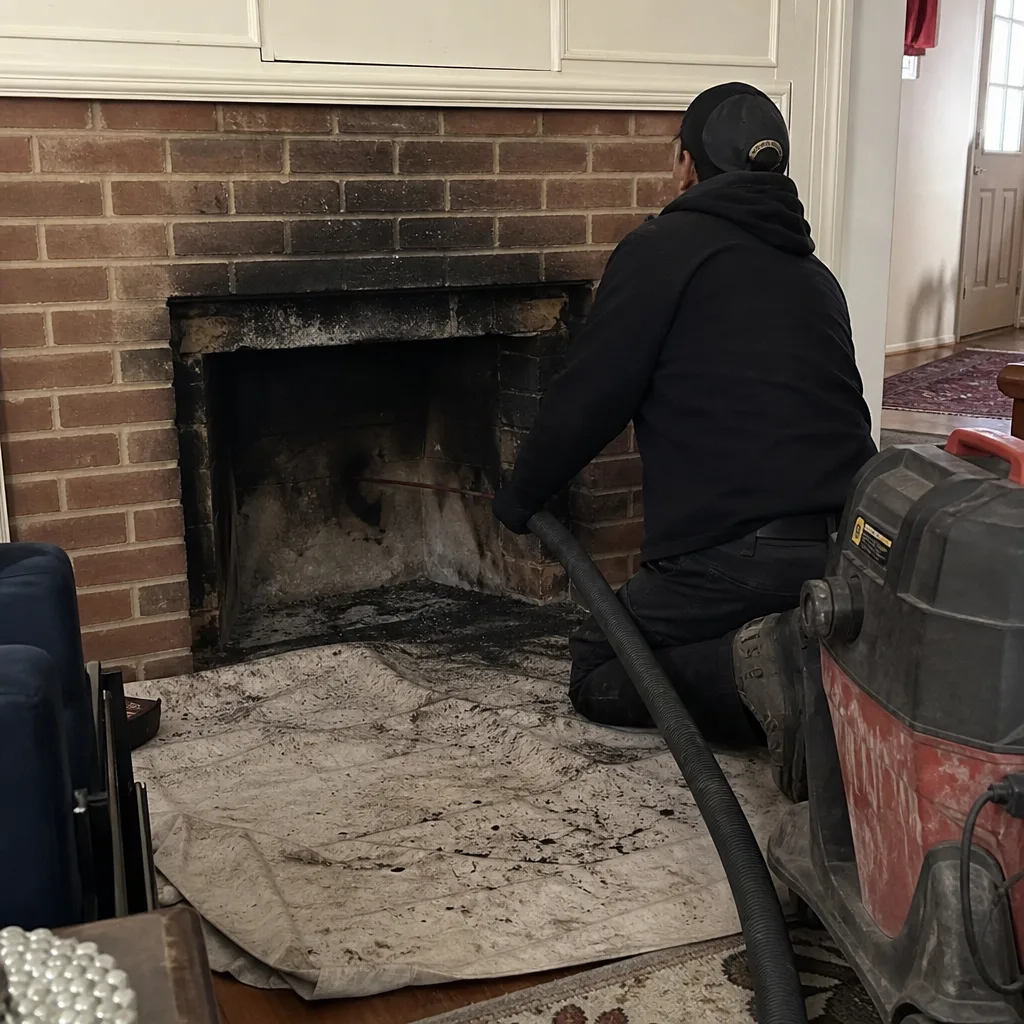 Before
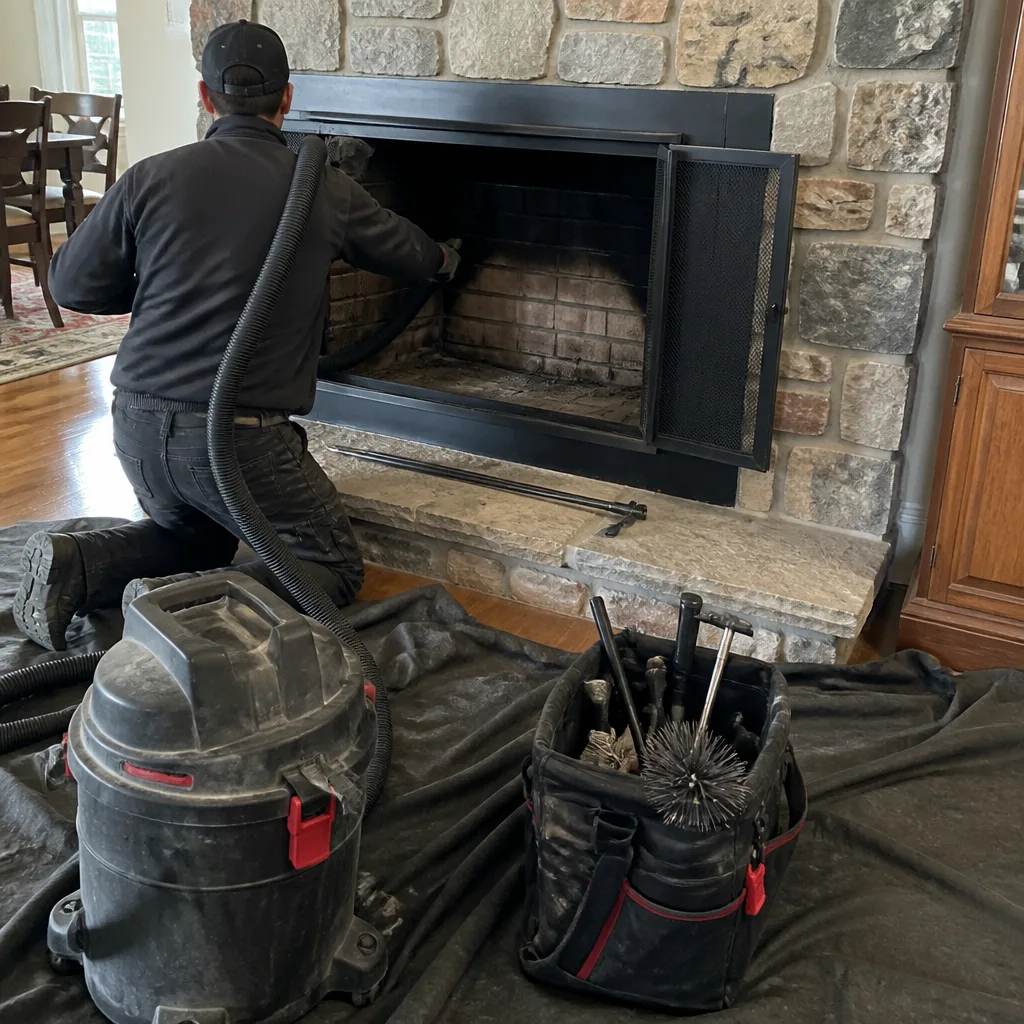 After
AfterChimney Cleaning Permits, Codes & Inspections in VA: What You Need to Know
Homeowners in Loudoun County have had real estate closings delayed because chimney repairs, done without permits, showed up during the buyer’s inspection. The sweep who did the work is long gone, and the seller is left scrambling to pull permits retroactively or cut the sale price. In Leesburg, where homes from the 1980s and 1990s are hitting the market as longtime owners downsize, this scenario plays out more often than you’d think. This guide shows exactly which chimney jobs require a permit in Virginia, which don’t, and what documentation you should keep so a routine cleaning never becomes a closing-day nightmare. For more on keeping your system in top shape, see our Complete Guide to Chimney Cleaning in Leesburg.
Quick Answer
Routine chimney cleaning and sweeping in Virginia do not require a permit. However, repairs discovered during that cleaning, liner replacement, firebox reconstruction, and new appliance installations typically do require permits under the Virginia Uniform Statewide Building Code. In Loudoun County, only a Class A or Class B contractor can pull these permits, and unpermitted work must be disclosed in real estate transactions.
Table of Contents
- Do You Need a Permit for Chimney Cleaning in Virginia?
- What the Virginia Uniform Statewide Building Code Says About Chimney Work
- How Loudoun County Handles Chimney Permits
- When a Level 2 Inspection Is Legally Required
- How Unpermitted Chimney Work Affects Insurance and Home Sales
- The Documentation Every Leesburg Homeowner Should Keep
- Common Mistakes to Avoid
- When to Call a Professional
- Frequently Asked Questions
- The Bottom Line
Do You Need a Permit for Chimney Cleaning in Virginia?
No. Routine chimney cleaning, sweeping, and basic maintenance do not require a building permit anywhere in Virginia, including Leesburg and Loudoun County. This is straightforward, and it’s where most homeowners stop asking questions. The problem is what comes next.
When a sweep finds a cracked flue liner, deteriorating mortar joints, or a rusted-out firebox, cleaning alone won’t fix it. The repair work that follows often does require a permit. Here’s where the line falls:
- No permit needed: Standard sweeping, creosote removal, debris clearing, crown sealing with crown coat, and minor cap adjustments that don’t alter the structure.
- Permit typically required: Liner replacement or relining, firebox reconstruction, damper replacement that changes the throat opening, new appliance installation (wood stove, insert, gas log set connected to the home’s fuel line), structural repairs to the chimney breast or foundation, and any modification to clearances to combustibles.
- Gray area: Crown rebuilding, extensive tuckpointing, and cap replacement. Loudoun County generally requires permits for crown rebuilds that involve formwork and structural concrete, but not for prefabricated cap installations.
In our experience across Leesburg neighborhoods like Potomac Station, Lansdowne, and the historic district near Wirt Street, the most common surprise is liner work. A homeowner schedules a cleaning. We run our camera and find spalling terracotta flue tiles, often from decades of thermal cycling in Virginia’s freeze-thaw climate. The homeowner wants it fixed before burning season. But liner replacement with a stainless steel system, DuraFlex or Olympia Chimney, requires a permit because it changes the engineered venting path of the appliance.
We’ve seen homeowners in Country Club Chase complete full liner replacements without permits, thinking the sweep handled it. The sweep was a one-truck operator who pulled the liner, collected payment, and disappeared. Two years later, the home goes under contract. The buyer’s inspector asks for permit documentation. There is none. The closing stalls.
The permit line is clear once you know where to look. Cleaning is maintenance. Repairs that affect the structure, venting, or fuel connection are construction. Construction needs a permit.
What the Virginia Uniform Statewide Building Code Says About Chimney Work
The Virginia Uniform Statewide Building Code, or USBC, adopts the International Building Code and International Residential Code with Virginia-specific amendments. For chimneys, the relevant sections are Chapter 10 of the IRC (R1001 through R1003 for masonry chimneys, factory-built chimneys, and chimney connectors) and the fuel gas code provisions for venting.
Here’s what matters for homeowners in practical terms:
- Liner replacement triggers permit requirements. R1003.11 requires chimneys to be lined with approved materials. When an existing liner is removed and replaced, the USBC treats this as an alteration to the venting system. The new liner must be listed to UL 1777 and sized correctly for the appliance it serves. In Loudoun County, this means submitting a permit application with a diagram showing the liner manufacturer, diameter, and appliance BTU rating.
- Firebox rebuilds are structural work. R1001 requires fireboxes to be constructed of solid masonry units minimum 2 inches thick, or metal factory-built assemblies listed to UL 127. Rebuilding a firebox, whether with new firebrick or a manufactured unit, requires inspection at rough-in and final. We’ve rebuilt fireboxes in Leesburg’s older homes near Ida Lee Park where the original construction predated modern code. The USBC doesn’t grandfather unsafe conditions. If the firebox is deteriorated, repair must meet current standards.
- Clearance to combustibles cannot be reduced without engineering. R1001.11 specifies minimum clearances. Some older Leesburg homes, particularly those built in the 1960s and 1970s in the Catoctin area, have framing closer than code allows. Fixing this often requires structural modification, which needs a permit.
- New appliance installations always require permits. Whether it’s a wood-burning insert, pellet stove, or direct-vent gas unit, the fuel connection and venting must be permitted and inspected. This is non-negotiable under the USBC and the Virginia Statewide Fire Prevention Code.
The USBC is enforced at the local level by Loudoun County’s Building Official. The county doesn’t send inspectors to every cleaning. But they do require permits for the work described above, and they do inspect when permits are pulled. A reputable contractor won’t hesitate to pull the permit. It’s part of doing the job correctly.
We’ve worked with Copperfield and Gelco components for years. These brands manufacture to the standards the USBC references. Using professional-grade materials isn’t about preference. It’s about passing inspection.
How Loudoun County Handles Chimney Permits
Loudoun County’s Department of Building and Development processes chimney-related permits through the same system as other residential construction permits. The specifics matter, because not every sweep or repair contractor can legally pull them.
Who Can Pull a Chimney Permit in Loudoun County
Virginia contractor licensing law requires a Class A or Class B contractor to pull permits for work exceeding $1,000. Class C contractors are limited to individual projects under $1,000 and cannot pull permits for larger jobs. Here’s what this means:
- Class A: No limit on project size. Can pull any chimney permit.
- Class B: Projects up to $120,000. Covers nearly all residential chimney work.
- Class C: Projects up to $1,000. Can clean, sweep, and perform minor repairs. Cannot pull permits for liner replacement, firebox rebuilds, or appliance installations.
We’ve encountered homeowners in Leesburg who hired a Class C sweep for what they thought was a cleaning. The sweep found liner damage, offered to “take care of it,” and installed an unpermitted liner. The homeowner saved a few hundred dollars upfront. They didn’t save anything when the permit issue surfaced later.
Before hiring any chimney contractor for repair work, ask for their Virginia DPOR license number and classification. Verify it at dpoor.virginia.gov. A legitimate contractor provides this without hesitation.
The Permit Process Step by Step
- Application: The contractor submits a permit application to Loudoun County, including scope of work, contractor license, and insurance documentation.
- Plan review: For liner replacements and appliance installations, the county reviews manufacturer specifications and sizing calculations. This typically takes 3-5 business days.
- Permit issuance: Once approved, the contractor receives the permit and posts it at the job site.
- Rough inspection: For firebox rebuilds and some liner installations, an inspector verifies the work before it’s enclosed.
- Final inspection: The inspector confirms code compliance and issues a certificate of completion.
- Certificate of occupancy or completion: This document should be provided to the homeowner and kept permanently.
Permit fees in Loudoun County are based on project valuation. A typical liner replacement runs $150-$250 in permit fees. Firebox rebuilds range higher depending on scope. These fees are modest compared to the cost of resolving unpermitted work during a home sale.
Leesburg-Specific Considerations
Leesburg’s historic district, roughly bounded by Market Street, Royal Street, and the W&OD Trail, includes homes with chimneys dating to the 18th and 19th centuries. The Town of Leesburg has its own Historic District Commission. Exterior alterations visible from the public right-of-way may require a Certificate of Appropriateness in addition to the building permit. This includes chimney cap styles, crown profiles, and exterior flue extensions.
We’ve worked on historic chimneys near the Harrison Hall and the Thomas Balch Library. The process takes longer, but it’s manageable with proper planning. Homeowners in these areas should start permit conversations early, especially if sale timing matters.
When a Level 2 Inspection Is Legally Required
NFPA 211, the National Fire Protection Association standard for chimneys, fireplaces, vents, and solid fuel-burning appliances, defines three levels of inspection. Level 1 is visual, performed during routine cleaning. Level 2 is camera-assisted and required in specific circumstances. Level 3 involves demolition of building components and is rare in residential settings.
A Level 2 inspection is not optional when:
- The property is being sold or transferred
- The fuel type is changed (wood to gas, gas to pellet, etc.)
- A new appliance is installed
- There has been a chimney fire, building fire, or seismic event
- The chimney has been unused for an extended period and is being returned to service
- There is visible damage or operational problems that suggest hidden defects
Virginia law doesn’t directly cite NFPA 211 in the USBC, but the standard is incorporated by reference in many local fire prevention codes. More practically, home inspectors in Leesburg and across Loudoun County reference NFPA 211 when evaluating chimneys. Insurance adjusters use it after claims. Real estate contracts increasingly require Level 2 documentation.
What a Level 2 inspection must include under NFPA 211:
- Visual inspection of all accessible portions of the chimney exterior and interior
- Inspection of accessible portions of the appliance and chimney connection
- Video scanning or other means of examining the flue interior
- Inspection of areas within reasonable reach in attics, crawl spaces, and basements
- Written report of findings with recommendations
At Hearthstone Chimney Co., our Level 2 inspections end with photos the homeowner can see and a plain-English verdict. We document like engineers, explain like craftsmen. No vague warnings. No pressure to buy. If the flue is sound, we say so. If it’s not, we show you exactly where and why.
In Leesburg’s climate, with hot humid summers and freeze-thaw winters, we’ve found that terracotta flue tiles in homes built between 1975 and 1995 are particularly prone to vertical cracking. The clay expands and contracts. Mortar weakens. A Level 2 camera catches this before it becomes a liner collapse or a house fire. We’ve documented this pattern in neighborhoods from Exeter to Beacon Hill to the villages near Route 15.
Virginia code doesn’t automatically trigger a Level 2 inspection in all circumstances, but the combination of USBC alteration requirements and NFPA 211’s scope means that any permitted repair work should include documented camera inspection. A permit without documentation is incomplete. Documentation without a permit may be questioned.
How Unpermitted Chimney Work Affects Insurance and Home Sales
This is where the abstract becomes concrete. Unpermitted chimney work doesn’t sit in a file somewhere. It shows up when you need things to go smoothly.
Homeowners Insurance
Insurance policies contain provisions requiring compliance with applicable building codes. If a chimney fire occurs and the insurer discovers unpermitted liner work or an uninspected appliance installation, claim denial is possible. We’ve seen this twice in our 42 years, both times with homeowners who used cut-rate contractors from outside Loudoun County.
The argument isn’t that the unpermitted work caused the fire. It’s that the policyholder failed to maintain the property to code standards, violating a policy condition. Virginia courts have upheld such denials in other construction contexts. Chimney claims follow the same logic.
More commonly, unpermitted work affects renewal. An insurer’s inspection, increasingly common in Northern Virginia, flags the discrepancy. The homeowner must then produce permits or face non-renewal. Producing permits two years after the fact is difficult. The original contractor may be unreachable. The county may require new inspection at current code standards, which can mean opening walls or removing liners.
Real Estate Transactions
Virginia’s Residential Property Disclosure Act requires sellers to disclose known defects and material facts. Unpermitted work, once known, must be disclosed. Failure to disclose can lead to post-sale litigation.
Even with disclosure, buyers and their lenders may require permits before closing. FHA and VA loans, common among Leesburg’s military and first-time buyers, have strict property condition requirements. Conventional lenders increasingly follow suit. A missing chimney permit can delay closing by weeks.
In 2023, we were called to a home in Ashburn Farms, just east of Leesburg, where the seller had replaced a liner three years prior without permits. The buyer’s inspector flagged it. The lender required documentation. The original contractor was out of business. We performed a new Level 2 inspection, documented the liner’s condition, and the seller pulled a retroactive permit. The county required partial disassembly for inspection. The closing delayed 23 days. The seller paid our inspection fee, the permit fee, and a $400 expedite fee to Loudoun County.
This was avoidable. The original permit would have cost $180.
Title and Recording Issues
Some jurisdictions are beginning to flag unpermitted work in property records. Loudoun County does not currently do this for chimney work specifically, but the building permit database is searchable. A diligent buyer’s agent checks it. We’ve seen agents in Leesburg’s competitive market use permit history as a negotiation tool, especially when multiple offers are in play.
The Documentation Every Leesburg Homeowner Should Keep
Paperwork is boring until it’s valuable. The homeowners who navigate permit issues smoothly are the ones who keep records organized. Here’s what to file and where:
For Routine Cleaning and Sweeping
- Invoice with date, scope, and technician name
- Condition report, even if brief
- Photos of any noted concerns
Keep these for three years. They establish maintenance history if an insurance claim arises.
For Permitted Repair Work
- Permit application copy
- Permit approval and posted permit documentation
- Inspection reports, rough and final
- Certificate of completion or occupancy
- Contractor invoice with license number
- Manufacturer specifications for liners, caps, or appliances installed
- Warranty documents
Keep these permanently. They transfer with the property and protect resale value.
For Level 2 Inspections
- Written report with dated photos or video
- Clear statement of findings and recommendations
- Technician credentials
Keep these for the life of the chimney or until superseded by a newer inspection. In Leesburg’s market, where homes change hands every 7-10 years on average, having a current Level 2 report ready accelerates sale preparation.
Storage Recommendation
We tell homeowners to scan everything to cloud storage and keep originals in a fireproof box. The irony of losing chimney documentation in a house fire is not lost on us. A Leesburg client in Raspberry Falls had this exact scenario. The paper files burned. The cloud backups saved the insurance claim.
When we complete work, we provide digital copies by email and offer to resend anytime. We’ve been in business since 1984. We’ll be here in thirty more years. Our records are your records.
Common Mistakes to Avoid
- Assuming the contractor pulled the permit. In Virginia, the property owner is ultimately responsible for permit compliance. Verify permit status at loudoun.gov before final payment.
- Hiring based on lowest price without checking license class. A Class C contractor cannot legally perform most chimney repairs that require permits. The low price often reflects what’s being skipped.
- Skipping the Level 2 inspection before sale. Leesburg’s competitive market rewards preparedness. A clean inspection report in the disclosure package builds buyer confidence and supports asking price.
- Discarding documentation after “minor” repairs. That crown rebuild you forgot about becomes a closing-day mystery when the buyer’s inspector asks for permit history. Keep everything.
- Assuming historic district rules don’t apply to chimneys. Leesburg’s Historic District Commission reviews visible exterior changes. A modern stainless cap on an 1820s chimney may require approval. Check before installation.
- Waiting until burning season to schedule. Permits take time. Inspections take time. If you discover needed repairs in October, you may not burn safely before January. Schedule cleaning in spring or early summer.
- Accepting verbal warranties. Our 90-Day Done Right Promise is in writing, no arguing. Any contractor worth hiring puts guarantees on paper. Verbal promises evaporate when problems arise.
When to Call a Professional
Call a qualified chimney professional when you notice smoke drafting into the room, visible cracks in the firebox or exterior masonry, white efflorescence staining indicating moisture intrusion, a rusted or missing cap, or if it’s been more than a year since your last inspection. Browse our more guides & resources for year-round chimney care tips. In Leesburg, where many chimneys serve as backup heat sources during winter storms, preventive maintenance isn’t optional. It’s how you avoid calling at midnight when the power’s out and the chimney won’t draw.
Hearthstone Chimney Co. offers free estimates in Leesburg. Our Chimney Cleaning & Sweep in Leesburg includes a Level 1 inspection with documented findings. If we find conditions requiring Chimney Repair in Leesburg or Fireplace Services in Leesburg, we explain exactly what permits are needed, handle the application, and provide all documentation. No surprises on the bill. No shortcuts in the work. Call (571) 701-7519. A live person answers, 24 hours a day, every day.
Frequently Asked Questions
A standard chimney cleaning and Level 1 inspection in the Leesburg area typically runs $199-$289, depending on accessibility and creosote buildup severity. Our $89 Seasonal Tune-Up, available during spring and early summer, includes basic cleaning and inspection for qualifying systems. Level 2 camera inspections run higher, $299-$449, but include video documentation and a written report. Call (571) 701-7519 for an exact quote. Estimates are free.
You need a new liner when the existing one is cracked, deteriorated, improperly sized for your appliance, or missing entirely. We don’t recommend replacement without camera evidence you can see for yourself. In Leesburg homes built 1975-1995, we regularly find terracotta flue tiles with vertical cracking from thermal cycling. If the damage is minor and localized, repair with HeatShield may suffice. If the flue is compromised along multiple courses, stainless steel relining with DuraFlex or Olympia Chimney components is the lasting fix. We’ll show you exactly what we found and explain whether work can safely wait or needs immediate attention.
The National Fire Protection Association recommends annual inspection, with cleaning as needed based on use and fuel type. In Leesburg’s climate, where humid summers accelerate masonry deterioration and cold winters drive heavy use, we advise annual service for wood-burning systems and biennial inspection for gas units with occasional use. Homes in wooded areas like those near the Catoctin Creek or along the Potomac may need more frequent cleaning due to cooler flue temperatures from dense tree cover, which increases creosote accumulation.
Skipped maintenance leads to creosote buildup, which can ignite at temperatures above 1,000 degrees Fahrenheit, causing chimney fires that damage liners and spread to framing. Moisture intrusion degrades mortar and rusts metal components. Carbon monoxide, an odorless, lethal gas, can leak through cracked flues into living spaces. These risks accumulate gradually, then manifest suddenly. The cost of prevention is modest. The cost of remediation, or worse, is not. Call (571) 701-7519 to schedule before burning season.
Homeowners can pull permits for work on their own primary residence in Virginia, but the work must still meet code and pass inspection. For chimney liner replacement, firebox rebuilds, and appliance installations, we don’t recommend this route. The sizing calculations, clearance verification, and inspection coordination require specialized knowledge. A failed inspection means rework, delay, and additional fees. Our technicians handle permits as part of the project. The permit fee is listed separately on your estimate. There is no markup.
A competent home inspector will note visible alterations, ask for permit documentation, and may recommend further evaluation if records are missing. In Leesburg’s market, where buyers are increasingly sophisticated and lenders cautious, missing permits are regularly flagged. The inspector may not find the work itself defective, but the documentation gap creates uncertainty. Uncertainty kills deals or costs money. Keeping permits current and accessible prevents this entirely.
The Bottom Line
Chimney cleaning itself is permit-free maintenance. The repairs it reveals often are not. In Virginia, the USBC draws a clear line between sweeping and construction, and Loudoun County enforces that line with specific contractor licensing requirements and inspection protocols. The homeowners who fare best are those who understand this distinction upfront, hire properly licensed contractors, insist on permits for permitted work, and keep documentation organized. In Leesburg’s active real estate market, this preparation protects sale value and prevents closing-day surprises. Done right, and we stand behind it. That’s not a slogan. It’s how we’ve worked since 1984.
Written by Russell Haines, Owner at Hearthstone Chimney Co., serving Leesburg since 2014.