
Last updated September 10, 2026
Level 1 sweep and inspection to the NFPA 211 annual standard - flue, crown, cap, and flashing checked and photographed
Chimney sweep logs do not sweep chimneys. They loosen some creosote - which then falls where a brush and vacuum still have to collect it.
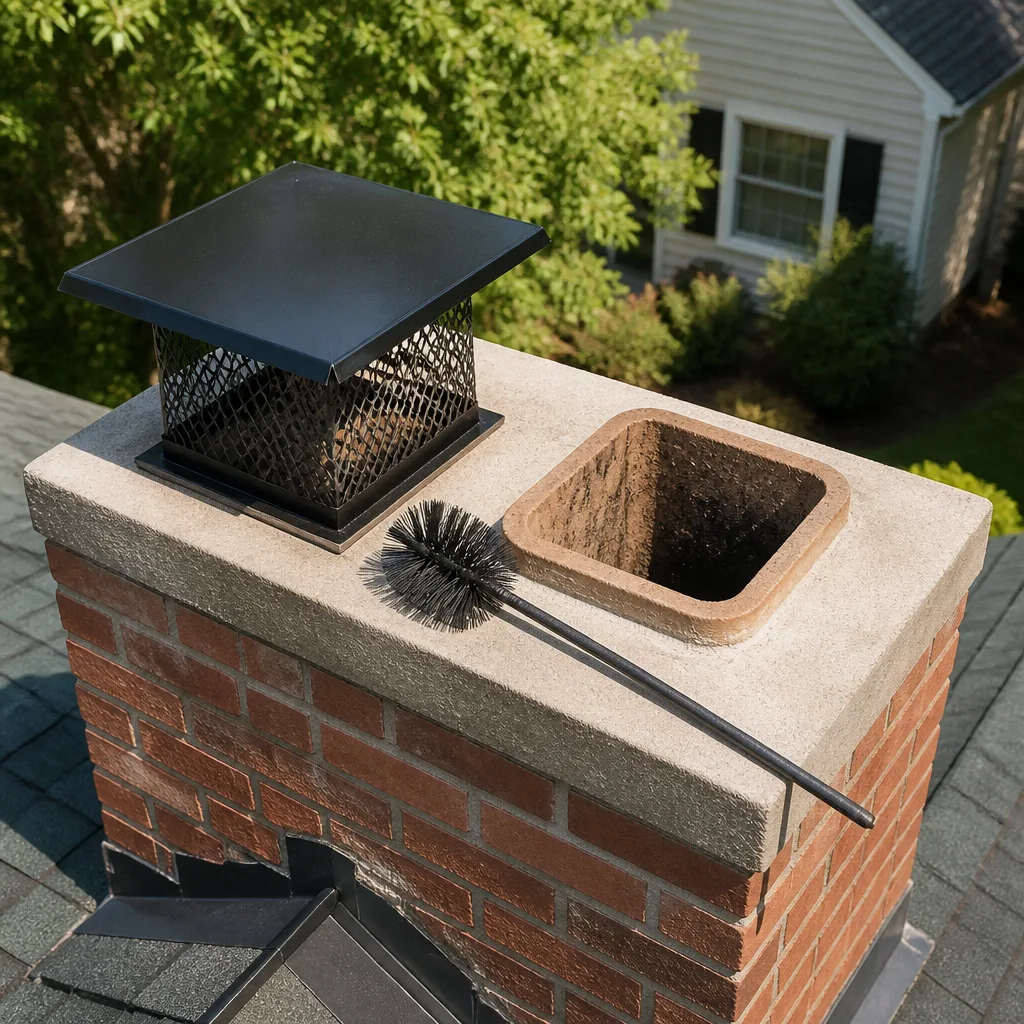
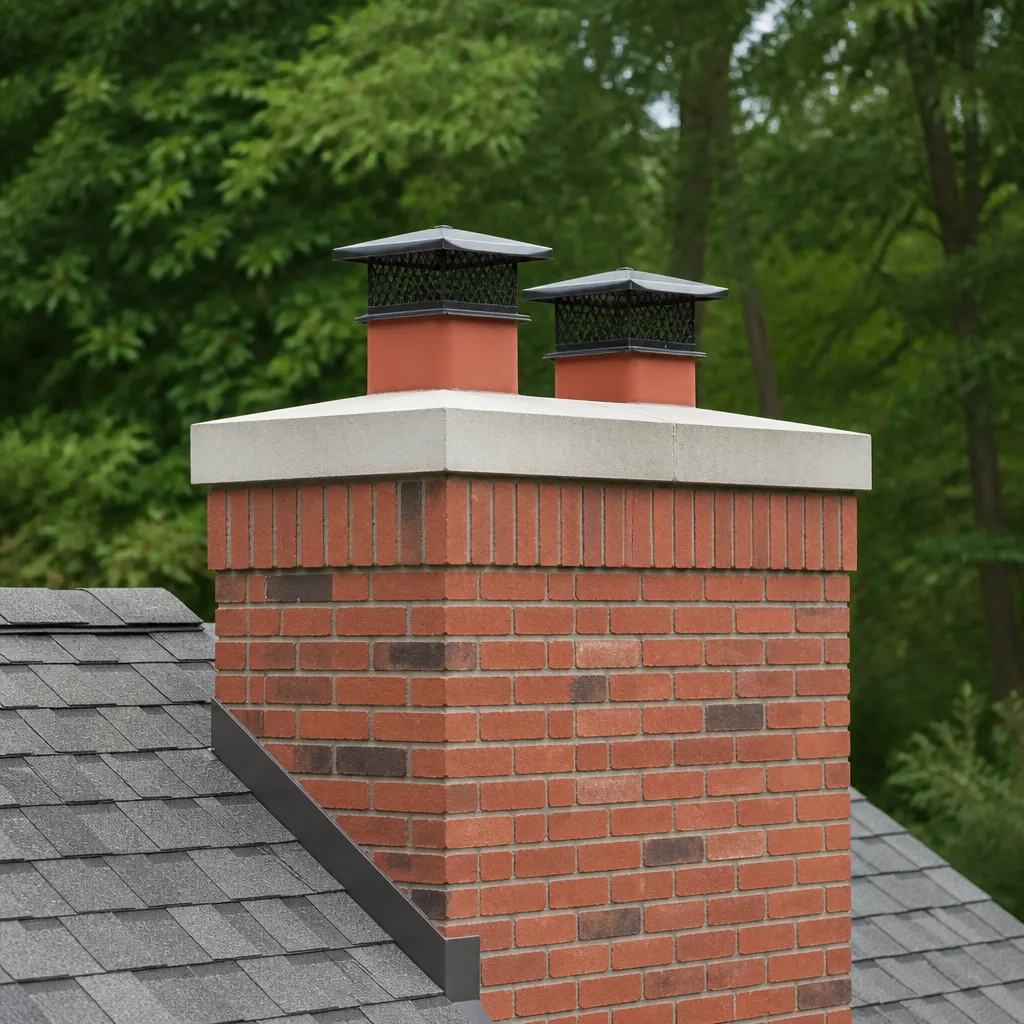
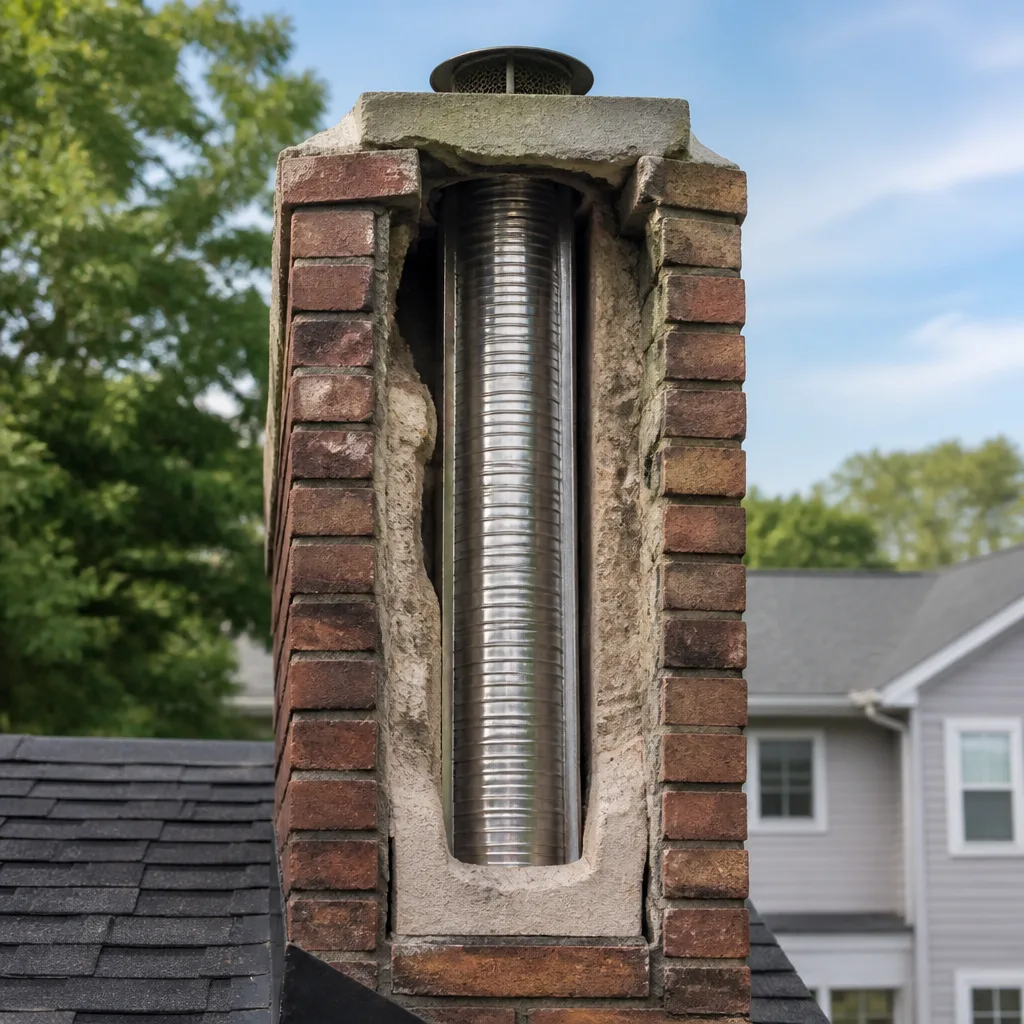
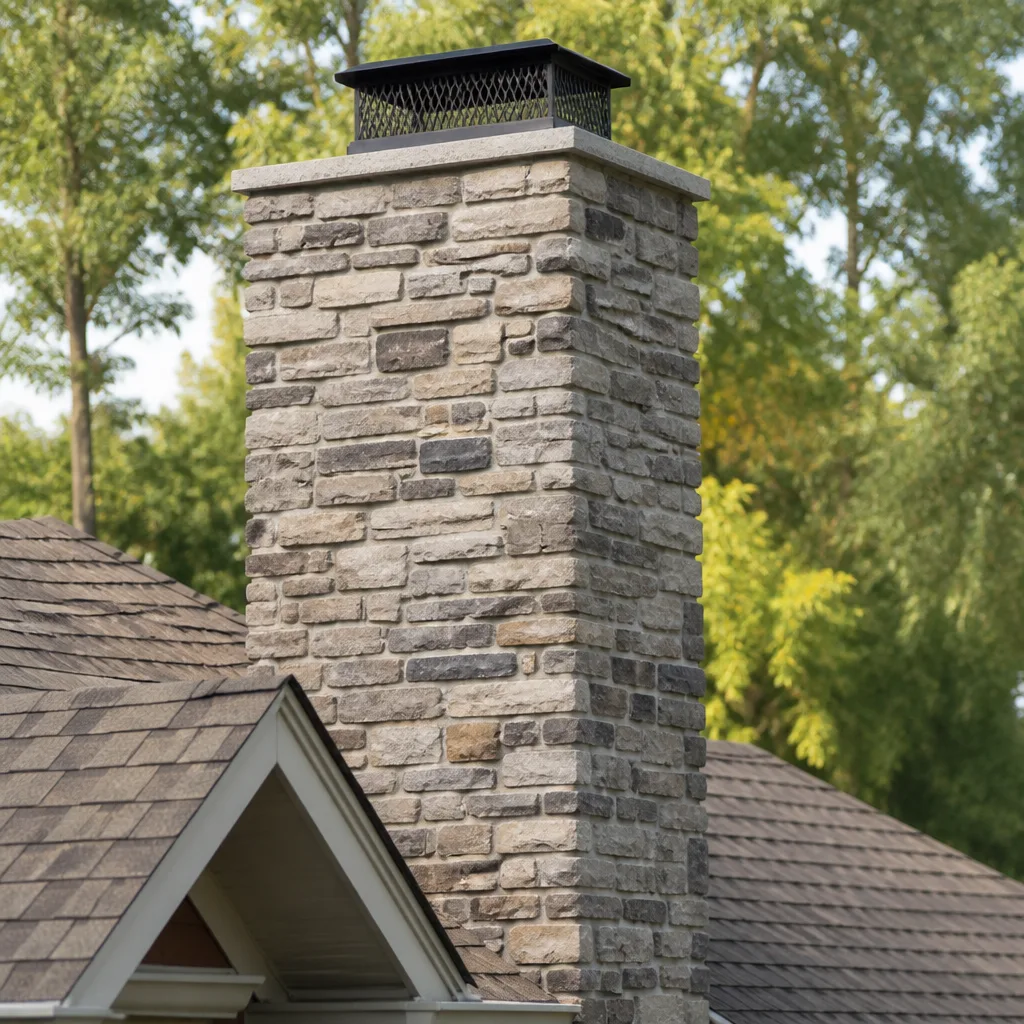
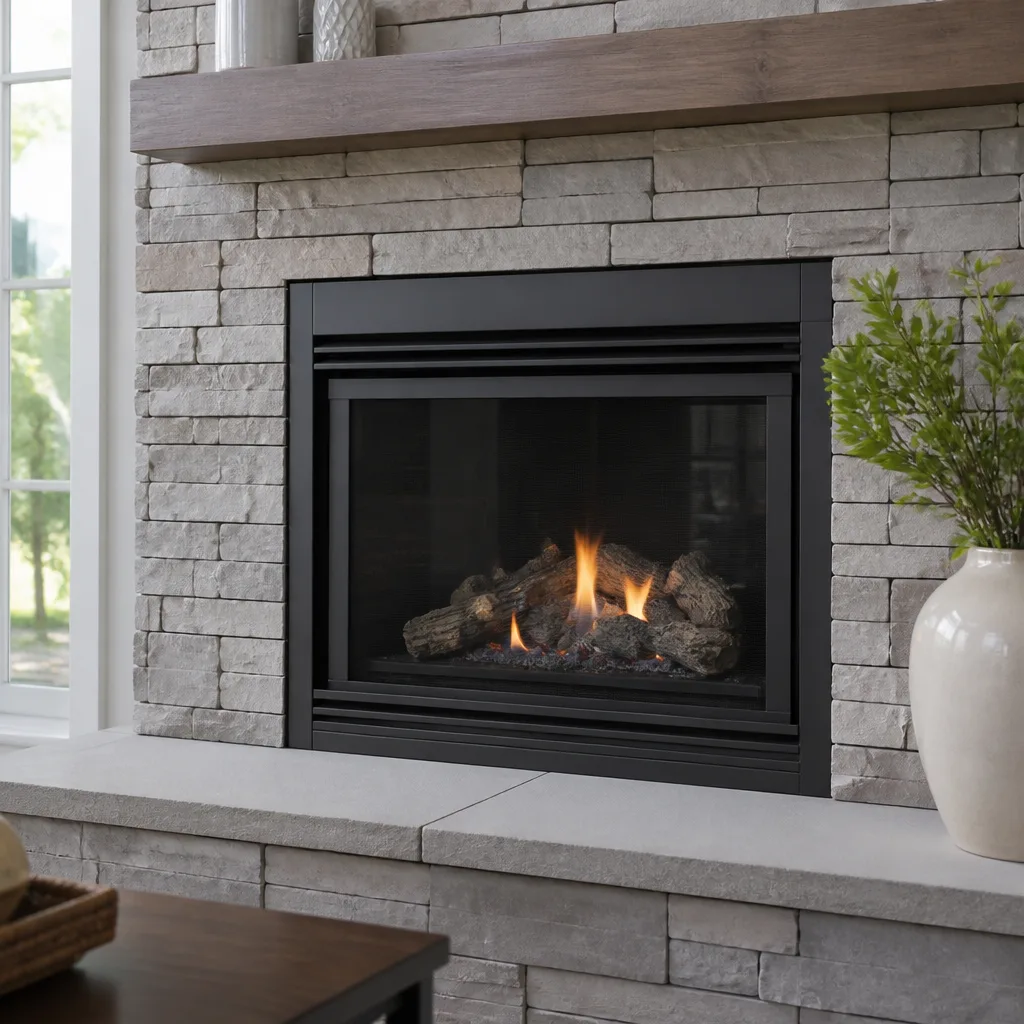
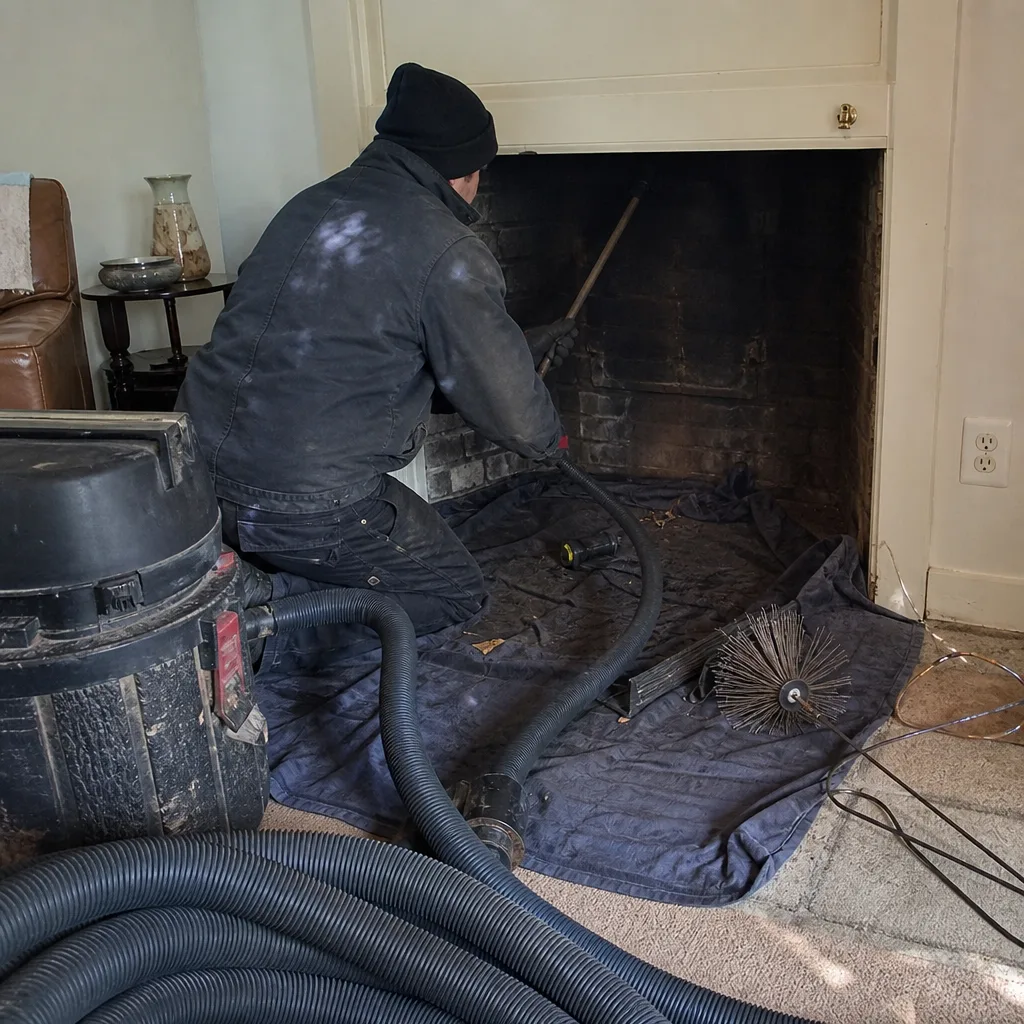 Before
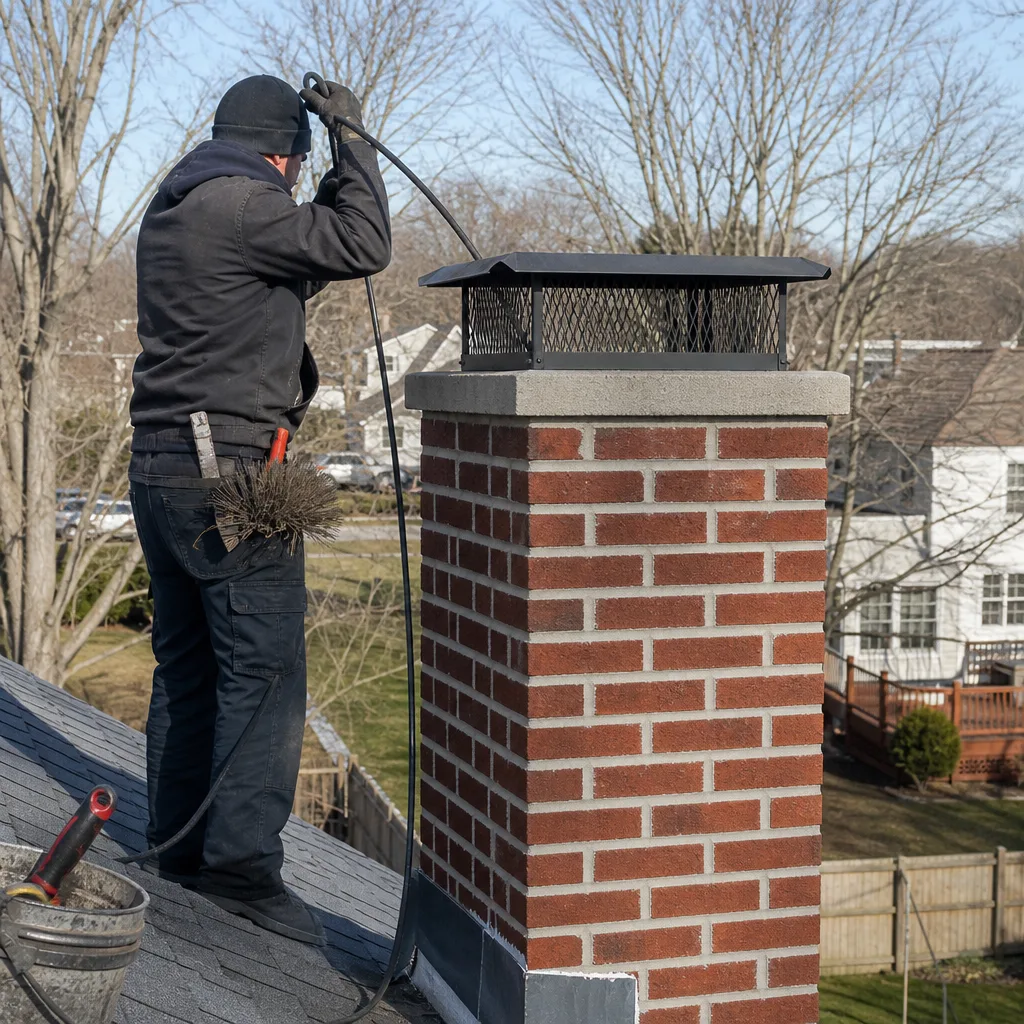 After
After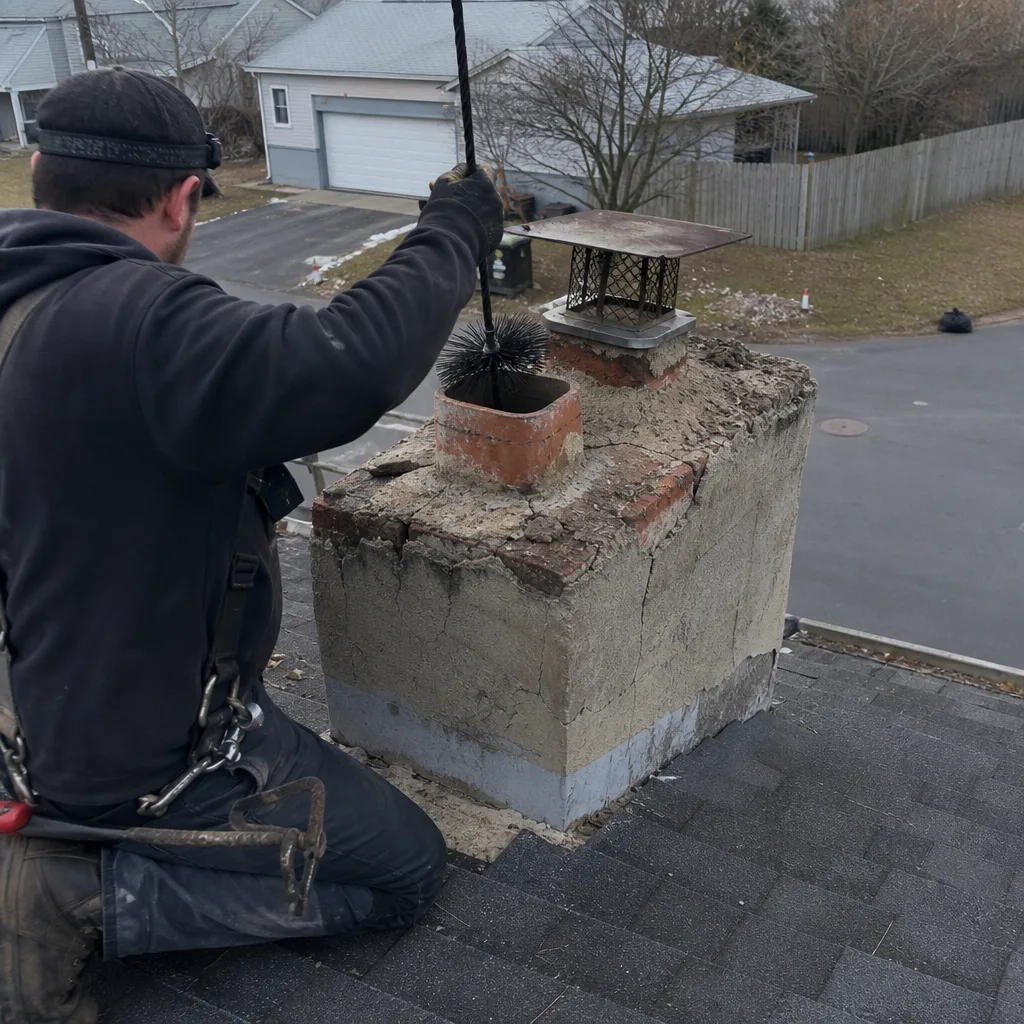 Before
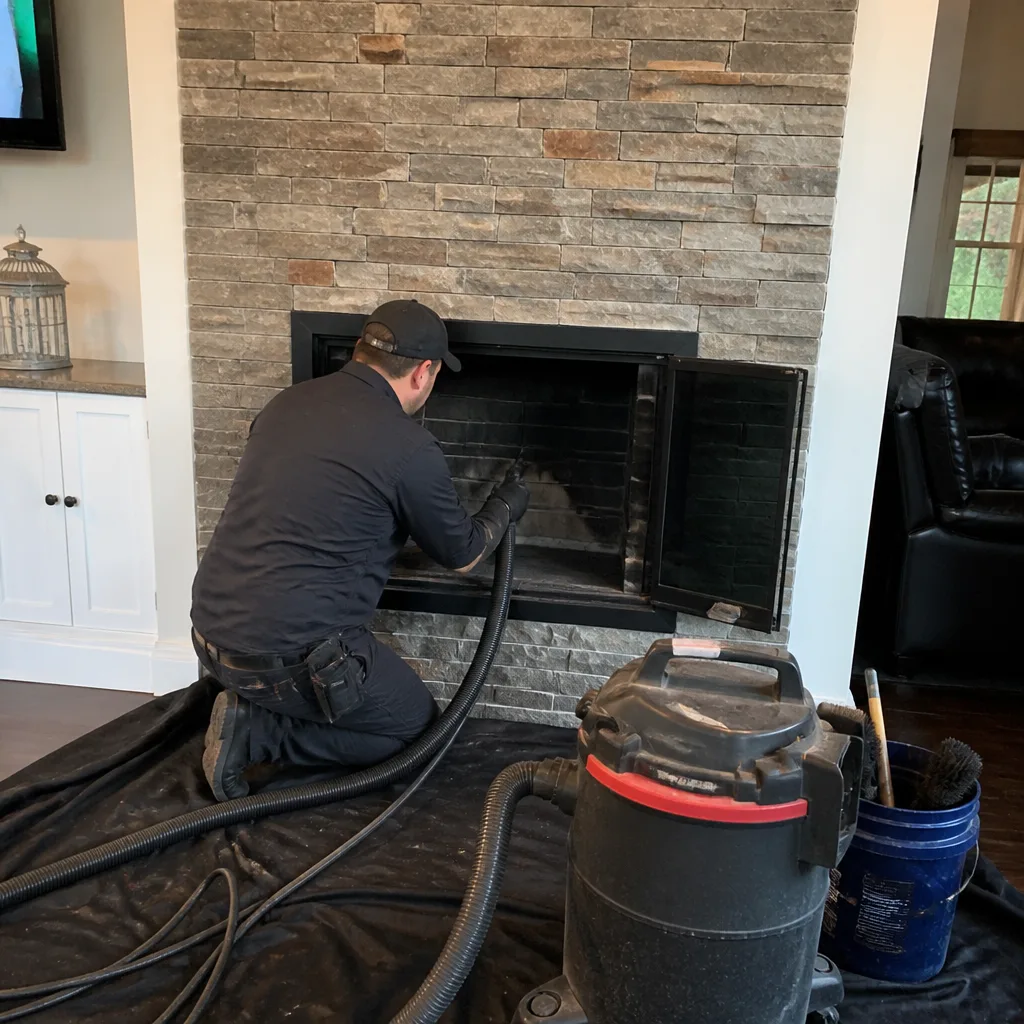 After
After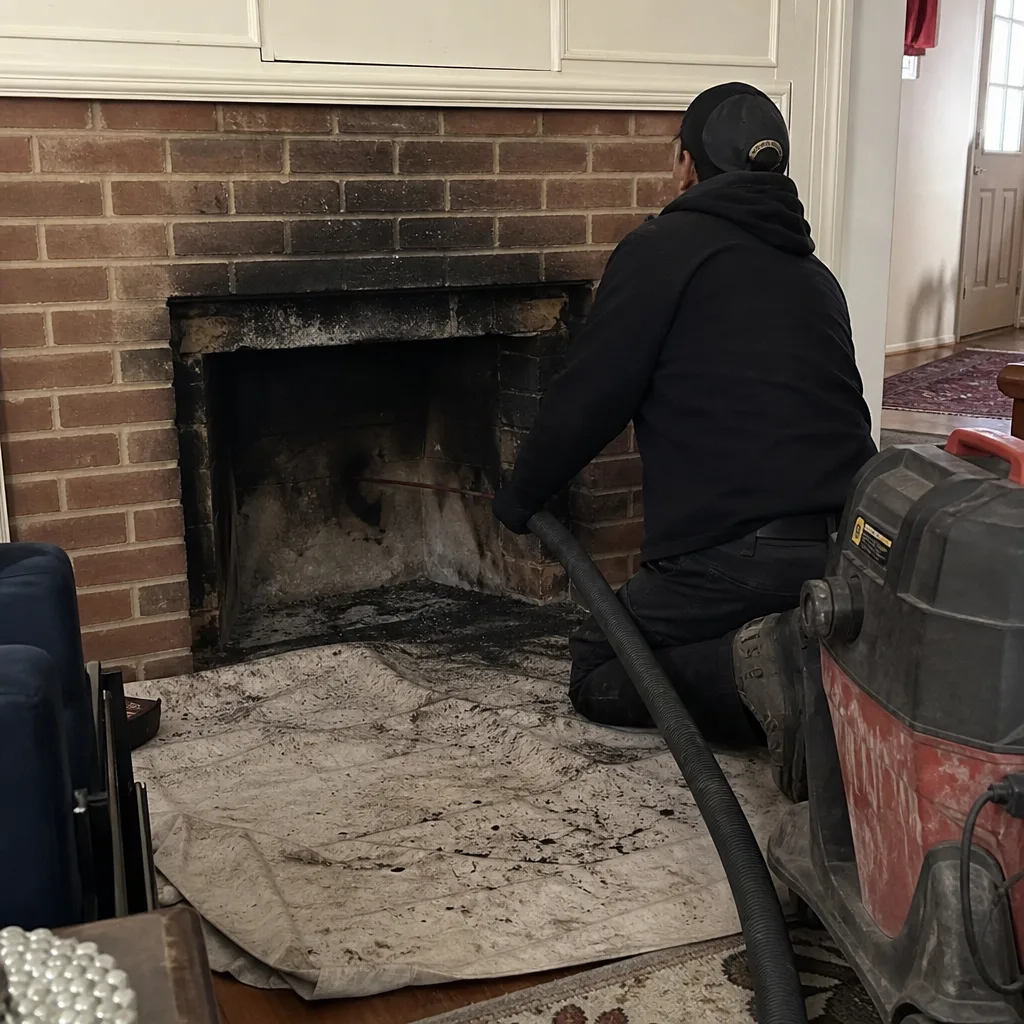 Before
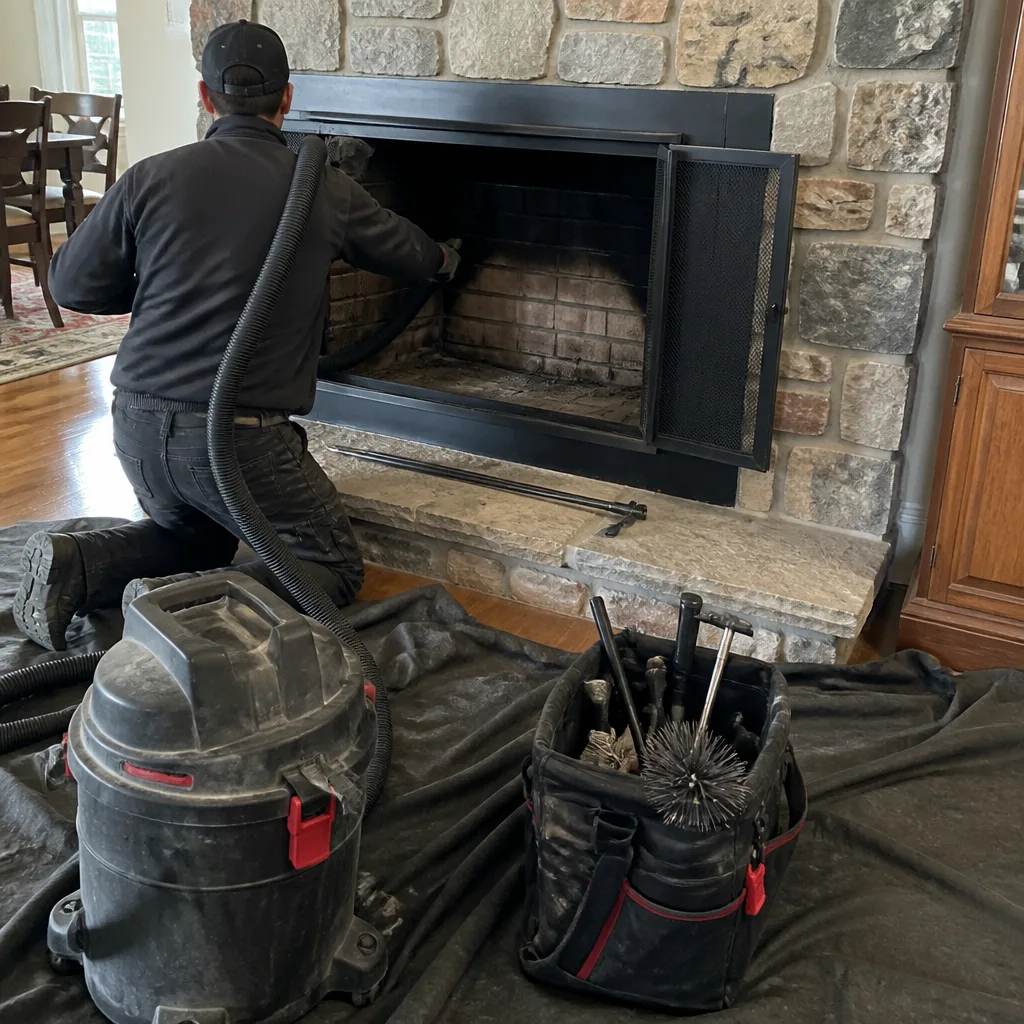 After
AfterChimney Cleaning Warning Signs: A Leesburg Homeowner’s Reference Guide
The white staining on the outside of your chimney isn’t cosmetic. It’s called efflorescence, and it means water is moving through your masonry right now. By the time it’s visible from your driveway in Leesburg, the damage inside the flue is usually already done. Most chimney warning signs don’t announce themselves. They show up as small, easy-to-dismiss details that homeowners walk past for months before something fails. This guide trains you to recognize the early signals, not the emergency ones, because that’s where intervention is still affordable and the repair is still straightforward. For more guides & resources, visit our blog.
Quick Answer
Chimney cleaning warning signs in Leesburg homes fall into three categories: exterior masonry changes (efflorescence, spalling bricks, missing mortar), interior performance issues (summer odors, poor draft, dark staining above the firebox), and hidden flue conditions that persist even after sweeping (stage 3 creosote, cracked liners, blocked smoke shelves). For a deeper dive, see The Complete Guide to Chimney Cleaning in Leesburg. If you notice white powder on exterior brick, smell chimney odor during humid summer months, or see black staining inside your firebox opening, schedule a Level-2 camera inspection. These signs indicate active problems that a standard sweep alone will not resolve.
Table of Contents
- Six Exterior Warning Signs Visible From the Ground
- Interior Signs Homeowners Blame on Other Causes
- Cosmetic Issue or Safety Issue? How to Tell From the Ground
- What a ‘Clean’ Chimney Can Still Harbor
- How Leesburg’s Climate Accelerates Chimney Damage
- A Simple Homeowner Log for Tracking Warning Signs
- Common Mistakes to Avoid
- When to Call a Professional
- Frequently Asked Questions
Six Exterior Warning Signs Visible From the Ground
You don’t need a ladder to spot most chimney problems. In our 42 years serving Northern Virginia, we’ve found that the homeowners who avoid the costliest repairs are the ones who know what to look for while walking the dog or pulling into the driveway. Here are the six exterior signals, what each one means structurally, and what action it requires.
1. Efflorescence (White Powdery Staining)
That chalky white residue on your brick or stone is salt left behind when water moves through masonry and evaporates at the surface. In Leesburg, we see this most often on chimneys facing southwest, where afternoon sun drives rapid evaporation after rain. The structural meaning: water is inside your masonry freeze-thaw cycle. Each winter, that water expands and contracts, opening hairline cracks that become pathways for more water. By year three or four, you’re looking at spalling bricks and compromised mortar joints. The flue liner inside is experiencing the same moisture intrusion, often with no visible interior sign until it fails.
2. Spalling Bricks (Flaking or Crumbling Faces)
When brick faces pop off in thin sheets or crumble to the touch, the freeze-thaw damage has advanced past the efflorescence stage. In neighborhoods like Lansdowne and Beacon Hill, where many homes were built during the 1990s construction boom, we’re now seeing spalling on chimneys that have endured 25 to 30 years of Virginia weather cycling. Spalling means the outer protective layer of the brick has failed. The brick beneath continues to absorb water, and the deterioration accelerates. This is not a cosmetic issue. It is structural failure that compromises the chimney’s ability to contain heat and gases.
3. Missing or Receding Mortar Joints
Run a finger along the horizontal joints between your bricks. If you can hook a fingernail into gaps or pull loose sand and grit, your mortar is failing. We call this “receding” or “washed” joints. In Leesburg’s older neighborhoods near the historic district, some chimneys still carry original lime mortar from the 19th century, which is softer and more sacrificial by design. But most post-1980 homes use Portland cement mortar, which should not recede noticeably before age 40. If yours is, water is the cause, and the chimney’s structural integrity is diminishing.
4. Cracked or Deteriorated Chimney Crown
The crown is the concrete or mortar cap that seals the top of your chimney, sloped to shed water away from the flue. From the ground, look for visible cracks, pieces missing, or a crown that appears to be separating from the brick beneath it. A failed crown is the single fastest route to interior water damage. Rain enters directly onto the smoke shelf and down the flue, carrying acids that degrade clay liners and accelerate rust on metal components. In Leesburg, crown damage often follows ice events like the January 2022 freeze, when rapid temperature drops caused thermal shock in concrete that was already micro-cracked from summer heat.
5. Rust Stains on the Chimney Exterior
Vertical rust streaks running down brick indicate corroded metal components: the chimney cap, flashing, or a metal flue liner. The structural concern depends on the source. Cap rust means the cap is failing and may be allowing debris and water directly into the flue. Flashing rust means the seal between your chimney and roof is compromised, a common leak path we find in Leesburg townhomes with complex rooflines. Liner rust is the most serious: it indicates a metal liner, typically stainless steel or galvanized, that has been exposed to moisture and combustion acids long enough to oxidize. Rust expands as it forms, cracking surrounding masonry and creating gaps where combustion gases can escape.
6. Leaning or Separating Chimney
Stand at the corner of your house and sight along the chimney’s edge against a vertical reference, like a door frame or the corner of your home. Any visible lean, or a gap between the chimney and the house wall, is a foundation or structural issue. In Leesburg’s clay-heavy soils, particularly in the Goose Creek watershed areas, seasonal soil expansion and contraction can undermine chimney footings. A leaning chimney is not a cleaning issue, but it is an urgent safety issue. The separation creates a direct path for fire and gases into wall cavities.
Interior Signs Homeowners Blame on Other Causes
The most dangerous warning signs are the ones that don’t look like chimney problems. We’ve had Leesburg homeowners call us about “a musty smell we can’t find” or “the fireplace just doesn’t draw like it used to” - complaints that sound like HVAC issues or aging house syndrome. If you’re weighing whether to tackle problems yourself, read our DIY vs Professional Chimney Cleaning: The Leesburg Homeowner’s Decision Guide. Often, they’re early chimney failure. Here’s what to watch for inside your home.
Summer Odor That Worsens in Humidity
That sour, ashy smell in your living room during July and August? It’s not your imagination, and it’s not your air conditioner. When outdoor humidity rises, moisture activates creosote deposits and soot that remain in the flue even after a standard sweep. The odor intensifies because warm, humid air is denser than the air in your flue, creating a downward pressure that pushes chimney air into your home. In Leesburg, where summer humidity routinely exceeds 75%, this is one of our most common off-season calls. The real warning: if you smell chimney odor, you have unremoved combustible deposits, and you have a pressure imbalance that can reverse under certain conditions, pulling smoke and carbon monoxide into living spaces during heating season.
Draft Problems: Smoke Backing Up, Slow Startup, or Cold Air Falling
A fireplace that “just doesn’t work right anymore” usually has a flue problem, not a technique problem. Draft issues we trace to chimney conditions include: smoke that spills into the room at fire startup (indicating a cold or blocked flue), a fire that burns sluggishly despite open dampers (indicating insufficient flue diameter or height, or partial obstruction), and cold air falling from the fireplace when not in use (indicating a missing or failed damper, or negative pressure in the home). In Leesburg’s tighter new construction, especially in communities like Woodlands Village and River Creek, whole-house negative pressure from kitchen exhausts and bathroom fans can overcome a marginal chimney’s natural draft. But the chimney itself must be ruled out first.
Dark Staining Above the Firebox Opening
Look at the masonry or metal facing directly above your fireplace opening. Black or brown staining in a V-pattern, narrowing as it rises, indicates smoke escaping the firebox before entering the flue. Causes include a smoke shelf that’s too shallow, a lintel that’s deteriorated and dropped, or creosote buildup that has narrowed the throat opening. Homeowners often paint over this staining repeatedly, treating it as a cosmetic nuisance. It’s not. Smoke outside the flue is a fire hazard, and the underlying condition is progressively worsening.
Moisture or Efflorescence Inside the Firebox
White staining on interior firebox walls means water is entering from above, typically through a cracked crown, failed flashing, or deteriorated mortar cap. The firebox is not designed to be wet. Repeated wet-dry cycling degrades firebrick and mortar, and moisture mixing with creosote creates acidic compounds that attack metal dampers and liners. If you see white powder inside your fireplace, the damage is already active above.
Unexplained Respiratory Symptoms in Heating Season
We do not diagnose medical conditions. We do document that carbon monoxide and fine particulate matter from a compromised chimney can cause symptoms that mimic colds, allergies, or fatigue: morning headaches that improve when you leave the house, persistent cough, or general malaise that correlates with fireplace or furnace use. If you experience these, install a CO detector on every floor and schedule a chimney inspection. The correlation is worth investigating, not dismissing.
Cosmetic Issue or Safety Issue? How to Tell From the Ground
Not every imperfection demands immediate action. The skill is knowing which signs mean “schedule this season” and which mean “call this week.” Here’s our field-tested distinction.
| Sign | Cosmetic (Schedule This Season) | Safety (Call This Week) |
|---|---|---|
| Efflorescence | Light, patchy white on a few bricks | Heavy coverage, returning within weeks of cleaning, with spalling beginning |
| Mortar condition | Surface weathering, no depth to gaps | Receding joints you can fit a pencil into, or loose mortar you can remove by hand |
| Crown condition | Hairline cracks, no pieces missing | Cracks wider than 1/8 inch, pieces dislodged, or visible separation from brick |
| Cap condition | Surface rust, intact mesh | Missing mesh, holes, or cap dislodged or missing entirely |
| Flashing | Minor sealant cracking at edges | Visible gaps, lifted sections, or water stains on interior ceilings near chimney |
| Firebox staining | Light soot above opening, normal use pattern | Thick, greasy deposits, or staining that extends more than 12 inches above opening |
The call-this-week signs share a common feature: they represent active pathways for fire, water, or combustion gases to leave their intended containment. A cracked crown with pieces missing is not “getting worse.” It is worse, right now, every time it rains. A firebox with heavy staining above the opening is not “due for cleaning.” It is actively leaking smoke into your living space during use.
In our Leesburg inspections, we use this same framework with homeowners. We show you the photos. We point to the specific threshold. You make the decision with real information, not pressure. If you’re ready to hire, see How to Hire a Chimney Cleaning Contractor in Leesburg: A Step-by-Step Guide.
What a ‘Clean’ Chimney Can Still Harbor
This is the warning sign category that fools even diligent homeowners. You’ve had the chimney swept. The brush came out black, then progressively cleaner. The sweep pronounced it “good to go.” But several dangerous conditions persist unseen, and a standard sweep alone will not reveal or resolve them.
Stage 3 Creosote in a Visually Clear Flue
Creosote deposits progress through three stages. Stage 1 is flaky soot, easily removed with a standard brush. Stage 2 is crunchy, porous material that requires a rotary chain or whip system. Stage 3 is glazed, hardened creosote, dense and tar-like, that adheres to flue walls like enamel. A standard brush passes over it. The flue looks clean to casual inspection. But Stage 3 creosote is the most combustible form, igniting at temperatures as low as 451 degrees Fahrenheit, and it burns with explosive intensity. We find it most often in Leesburg homes with older woodstoves or fireplaces that are damped down overnight for long, slow burns - the exact conditions that favor glazed deposit formation. Detection requires a Level-2 camera inspection, where the glossy, reflective surface is visible on monitor.
Cracked Clay Liners Without Visible Debris
A clay tile liner can develop longitudinal cracks, spalled interior surfaces, or missing mortar between joints, all invisible from the firebox and undetectable by a sweep brush. The brush moves past the damage. The flue appears clean. But combustion gases are migrating through cracks into the surrounding masonry, and in a chimney fire, flames can penetrate to structural framing. In our Leesburg work, we replace cracked clay liners with stainless steel systems from DuraFlex or Olympia Chimney, depending on the application and fuel type. The camera inspection is what finds the damage that sweeping misses.
Blocked or Compromised Smoke Shelf
The smoke shelf is the horizontal surface behind the damper, designed to catch downdrafts and debris. Over decades, it accumulates fallen mortar, broken brick fragments, animal nesting material, and compacted soot. A sweep brush doesn’t reach it effectively. The result: restricted airflow, poor draft, and a reservoir of combustible material directly above the fire. In historic Leesburg homes with original construction, we’ve removed 40 pounds of compacted debris from smoke shelves that had been “swept” annually for years.
Deteriorated or Missing Flue Liner Sections
In very old chimneys, or those damaged by chimney fires, sections of clay liner can be missing entirely, exposing bare brick to direct combustion. This is a code violation and a fire hazard. The chimney may draft adequately. It may appear clean. But brick and mortar are not rated for direct flame contact, and the mortar joints are direct pathways to combustible framing. A Level-2 inspection with camera documentation is the only reliable detection method.
Hidden Obstructions: Bird Nests, Collapsed Liner Sections, or Construction Debris
Partial obstructions don’t always cause obvious symptoms. A chimney may draw adequately at low fire levels but fail when the fire is built up. Or it may perform well in calm weather but backdraft during wind from a particular direction. We’ve found collapsed clay tiles wedged in flue offsets, bird nests in unused flues that share a wall with active ones, and in one Leesburg renovation, a contractor’s discarded lunch bag from 1987. None of these yield to standard sweeping. All require camera inspection and mechanical removal.
How Leesburg’s Climate Accelerates Chimney Damage
Chimney deterioration is not uniform across climates. Leesburg’s specific weather patterns create acceleration factors that homeowners in drier or more stable regions don’t face.
Freeze-thaw cycling: Loudoun County averages 25 to 30 freeze-thaw cycles per winter, with temperatures oscillating above and below 32 degrees. Each cycle, water in masonry expands about 9 percent. The cumulative stress opens micro-cracks, then small cracks, then failure paths. A chimney that might last 60 years in a stable climate shows significant masonry deterioration in 30 to 35 years here.
Humidity-driven interior damage: Our summer humidity, regularly 70 to 85 percent, activates dormant chimney problems. Moisture that entered through a cracked crown in March continues working through July, growing mold in smoke shelves, rusting metal components, and degrading mortar. The damage doesn’t pause when you’re not using the fireplace.
Wind exposure on ridge-top homes: Leesburg’s topography, with developments on the ridges of the Bull Run Mountains and Catoctin Mountain foothills, exposes chimneys to sustained winds that drive rain horizontally into crown cracks and deteriorated mortar. Homes in communities like Belmont Country Club and Creighton Farms experience wind-driven rain that chimneys in valley locations don’t face.
Acid rain and atmospheric pollution: Northern Virginia’s position downwind of the Ohio River Valley industrial corridor means precipitation pH averages 4.3 to 4.5, significantly more acidic than neutral. This acidity accelerates degradation of limestone and marble chimney elements, and contributes to mortar deterioration. It’s a background factor that adds years of equivalent aging.
For these reasons, we recommend more frequent inspection in Leesburg than national averages suggest. The Chimney Cleaning & Sweep in Leesburg page details our recommended intervals by fuel type and usage pattern.
A Simple Homeowner Log for Tracking Warning Signs
The most valuable information you can give a sweep is trend data: when symptoms started, how they’ve changed, what correlates with weather or usage. Vague complaints (“it’s been acting up”) waste time and obscure patterns. Here’s a log format we developed with Leesburg homeowners over decades. It takes two minutes per entry.
Chimney Observation Log
Print this format. Keep it near the fireplace or in your home maintenance file.
| Date | Observation | Conditions | Action Taken / Notes |
|---|---|---|---|
| Example: 11/15/2024 | Smoke spilled into room for 3 minutes at startup | 45°F outside, wind from NW, damper fully open | Fire drew normally after warmup. Will monitor. |
| Example: 7/8/2024 | Strong ashy odor in living room, worse near fireplace | 85°F, 78% humidity, AC running, no fire in 4 months | Odor faded by evening. Noted for fall inspection. |
What to Record
- Draft performance: Does fire start easily? Any smoke spillage at startup? Does draft improve as fire establishes?
- Odor events: When, where in the house, weather conditions, whether HVAC was running.
- Visual changes: New exterior staining, mortar debris in yard or on roof, pieces of brick or crown material.
- Moisture signs: Water in firebox, damp odor, efflorescence inside or out.
- Animal activity: Sounds in flue, debris falling into firebox, visible nesting material.
- Performance changes: “Used to heat the room in 30 minutes, now takes an hour” - specific, measurable shifts.
Bring this log to your inspection. It transforms a generic “check the chimney” visit into targeted diagnostic work. In our experience, homeowners who keep logs get more accurate diagnoses and avoid the exploratory work that drives up inspection costs.
Common Mistakes to Avoid
- Assuming a clean chimney is a safe chimney. Sweeping removes combustible deposits. It does not evaluate liner condition, crown integrity, or structural soundness. These require separate inspection.
- Waiting for “the burning season” to schedule. In Leesburg, our schedule fills by mid-September. Spring and summer inspections reveal problems when there’s time to fix them without urgency pricing, and when contractors aren’t competing for the same crew availability.
- Ignoring summer odor as “just humidity.” The odor is a symptom of creosote activation and pressure imbalance. Both indicate conditions that will worsen, not improve, when you light the first fire.
- Accepting a verbal “looks fine” without documentation. A legitimate inspection produces photos you can see and a written report. Anything less is not a record you can reference or dispute.
- Treating exterior staining with sealants or paint without addressing water source. Waterproofing coatings trap moisture inside masonry if the underlying leak isn’t stopped. We’ve seen well-intentioned homeowners accelerate spalling by sealing efflorescence instead of repairing the crown.
- Assuming new construction chimneys don’t need early inspection. Leesburg’s building boom in the 1990s and 2000s produced chimneys with known defects: improper crown slope, unlined flues in some spec homes, and flashings installed without proper step integration. Age alone is not the predictor; construction quality and inspection at build are.
- Using the fireplace as a diagnostic tool. “Let’s light a fire and see what happens” is how minor problems become chimney fires. If you suspect a problem, inspect first. Burn second.
When to Call a Professional
Call for inspection when you observe any of the following: visible leaning or separation of the chimney from the house; rust stains that indicate active metal corrosion; a crown with cracks wider than 1/8 inch or missing pieces; smoke spillage into the room during normal fireplace operation; persistent odor that correlates with weather conditions; or any exterior change that appears suddenly after a storm or freeze event.
Call promptly, not urgently, for: efflorescence that returns after cleaning; mortar joints that are receding but not yet loose; draft performance that has gradually declined; or a chimney that has not had Level-2 camera inspection in more than five years.
Chimney Repair in Leesburg requires documentation before work begins. Hearthstone Chimney Co. offers free estimates with Level-2 camera inspection, photo documentation, and a plain-English verdict. No work is recommended without evidence you can see for yourself. Call (571) 701-7519 to schedule. A live person answers, 24 hours a day, every day.
Frequently Asked Questions
A standard chimney sweep in Leesburg typically ranges from $175 to $275 for a single flue, depending on accessibility, creosote stage, and whether a basic Level-1 inspection is included. A Level-2 camera inspection, which we recommend for any chimney showing warning signs or exceeding five years since last camera evaluation, adds $100 to $200. Hearthstone Chimney Co. offers an $89 Seasonal Tune-Up that includes sweep and basic inspection for qualifying systems. Call (571) 701-7519 for exact pricing on your specific chimney - estimates are free.
You need a new liner if the existing one is cracked, missing sections, or improperly sized for your appliance - not because we say so, but because the building code and fire safety standards require it. An unlined or damaged chimney allows combustion gases to penetrate masonry and potentially reach combustible framing. In our Leesburg inspections, we document liner condition with camera photos and show you the specific damage. If the liner is sound, we say so. If it’s compromised, we explain exactly where and why, using HeatShield cerfractory sealant for certain repairable cracks or stainless steel systems from DuraFlex or Olympia Chimney for full replacements. The decision is yours, with real evidence.
The National Fire Protection Association recommends annual inspection for all chimneys, with sweeping as needed based on deposit accumulation. In practice, Leesburg homeowners using wood as primary heat should sweep annually; occasional fireplace users every 1 to 2 years depending on burn volume; and gas appliance users every 2 to 3 years with annual inspection. Our clay soils and freeze-thaw climate mean masonry deterioration can advance between sweeps, so inspection frequency should not slip even if sweeping intervals extend.
The progressive outcomes are predictable and well-documented: Stage 1 creosote becomes Stage 3, increasing fire risk; minor crown cracks become major water intrusion, spalling, and structural compromise; a cracked liner allows gas migration that degrades masonry from inside; and blocked or restricted flues cause poor combustion, carbon monoxide production, and potential backdrafting into living spaces. None of these conditions announce themselves dramatically until failure. The homeowner who skips maintenance typically discovers the problem through a chimney fire, a leak stain on the ceiling, or a failed home inspection at sale. Preventive cost is always lower than reactive repair.
Summer humidity activates creosote and soot deposits, producing odor through moisture-driven chemical reaction. Additionally, warm outdoor air is often denser than air in your flue, creating downward pressure that pushes chimney air into your home. In winter, the flue is warmer and the pressure differential favors upward draft. The summer odor is not harmless. It indicates unremoved deposits and a pressure condition that can reverse during heating season under certain weather conditions. A proper sweep removes the odor source; inspection identifies whether pressure management (damper repair, top-sealing damper installation, or household pressure balancing) is also needed.
You can and should observe exterior signs from the ground, monitor performance, and keep the log we described above. But you cannot safely evaluate flue interior condition, liner integrity, or structural soundness without proper equipment and training. Chimney inspection requires specialized cameras, lighting, and knowledge of code requirements and failure patterns. In our view, the homeowner’s role is vigilant observation and accurate reporting. The professional’s role is diagnostic evaluation and documented verification. Both are necessary. Neither replaces the other.
The Bottom Line
Chimney warning signs in Leesburg homes follow a pattern: small, gradual, easily explained away, until they’re not. The white stain you noticed last spring becomes spalling brick this winter. The summer odor you attributed to humidity indicates creosote that will ignite at the wrong moment. The draft that “just needs a better fire” signals a flue condition that a standard sweep won’t touch. This guide exists to interrupt that pattern by training your eye for early signals and your judgment for appropriate response. Document what you observe. Schedule inspection before urgency. Accept only photo-documented, plain-English assessment. And work with a company that plans to be here when you need them next, because chimney maintenance is not a single transaction. It’s a decades-long relationship with a system that protects your home every time you light a fire.
Fireplace Services in Leesburg from Hearthstone Chimney Co. include inspection, sweeping, repair, and ongoing maintenance planning. We document every inspection with photos and a written verdict. We back every job with the 90-Day Done Right Promise, in writing, no arguing. And we’ve been answering the phone with a live person for over 42 years.
Written by Russell Haines, Owner at Hearthstone Chimney Co., serving Leesburg since 2014.