
Last updated September 10, 2026
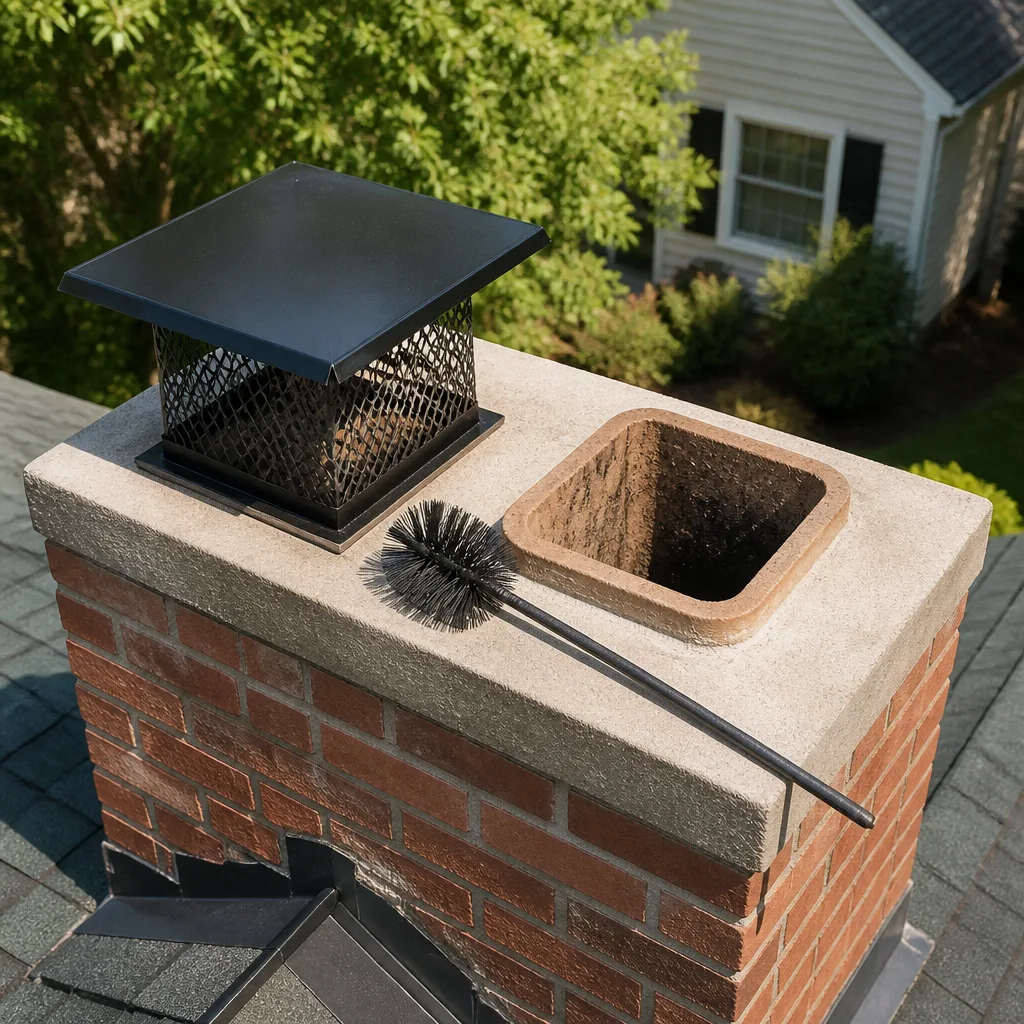
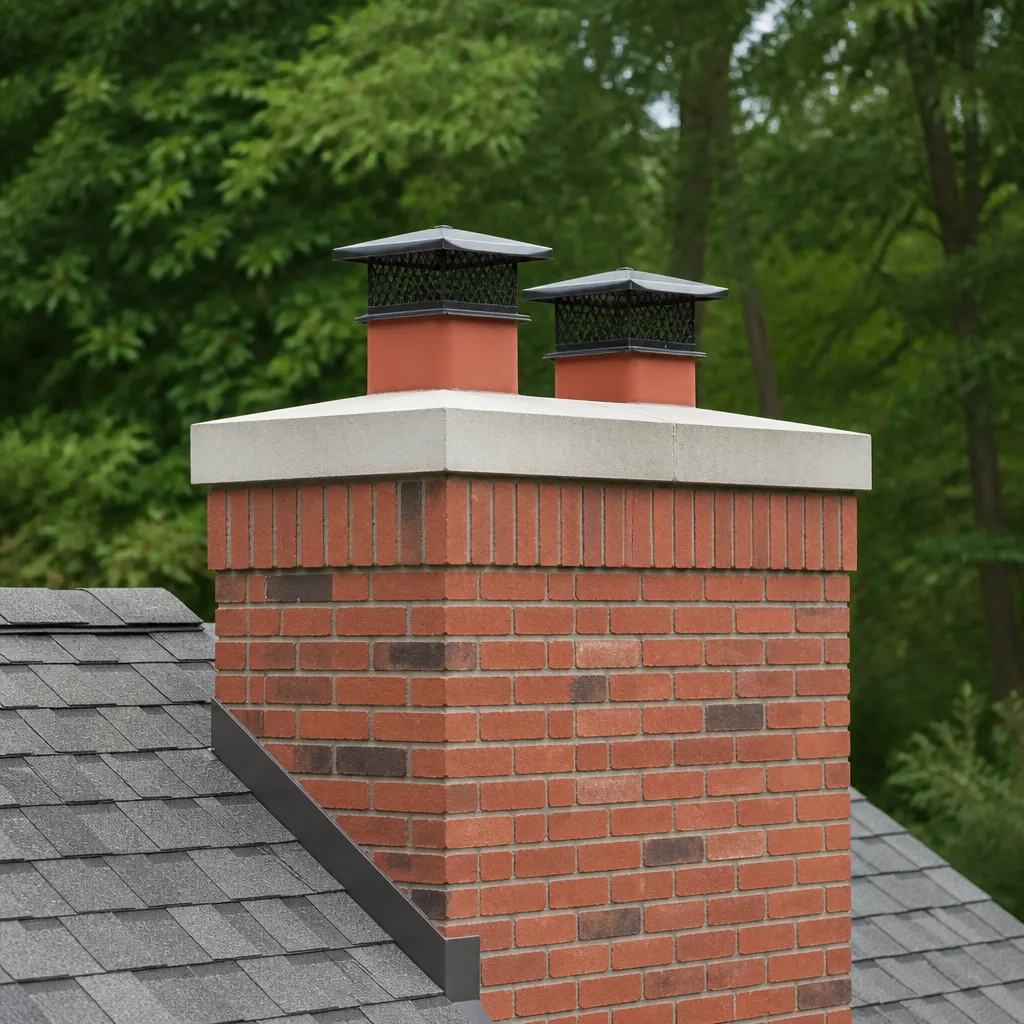
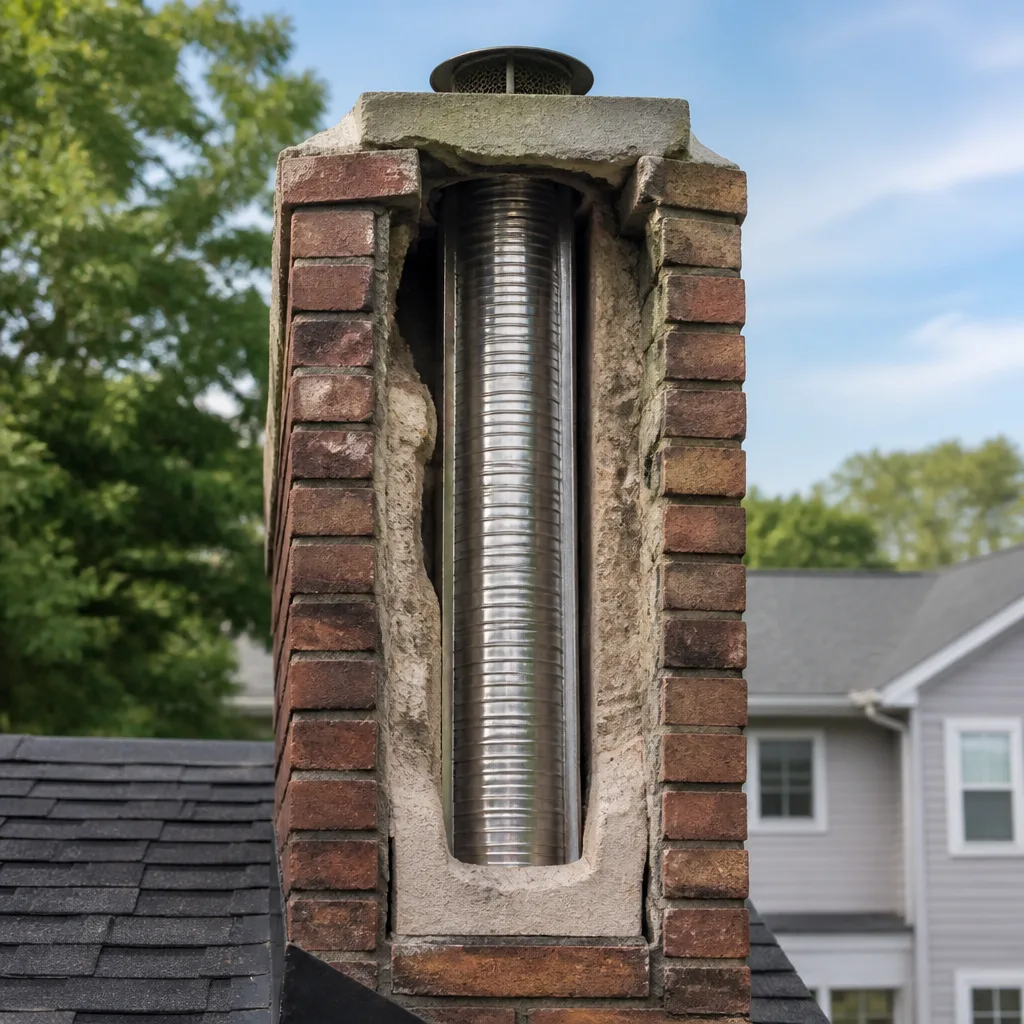
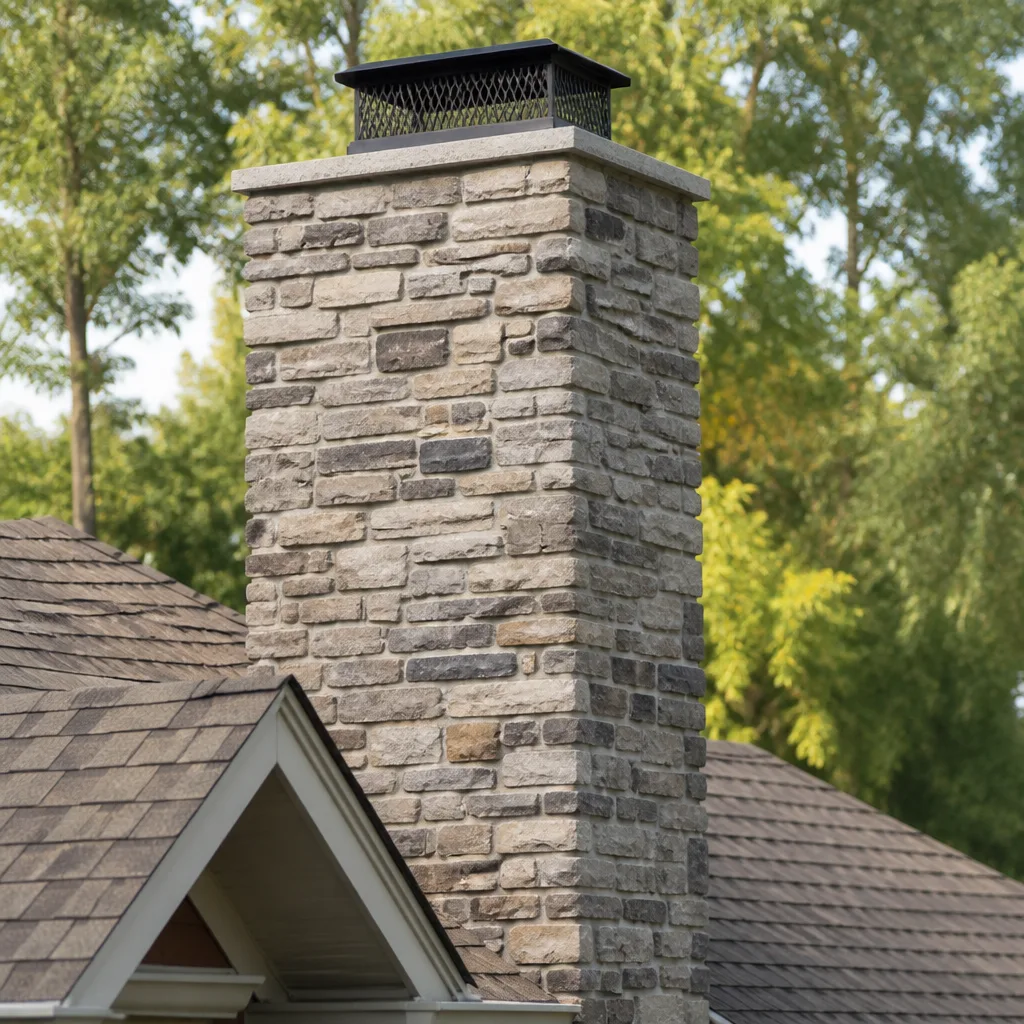
Level 1 sweep and inspection to the NFPA 211 annual standard - flue, crown, cap, and flashing checked and photographed
Chimney sweep logs do not sweep chimneys. They loosen some creosote - which then falls where a brush and vacuum still have to collect it.
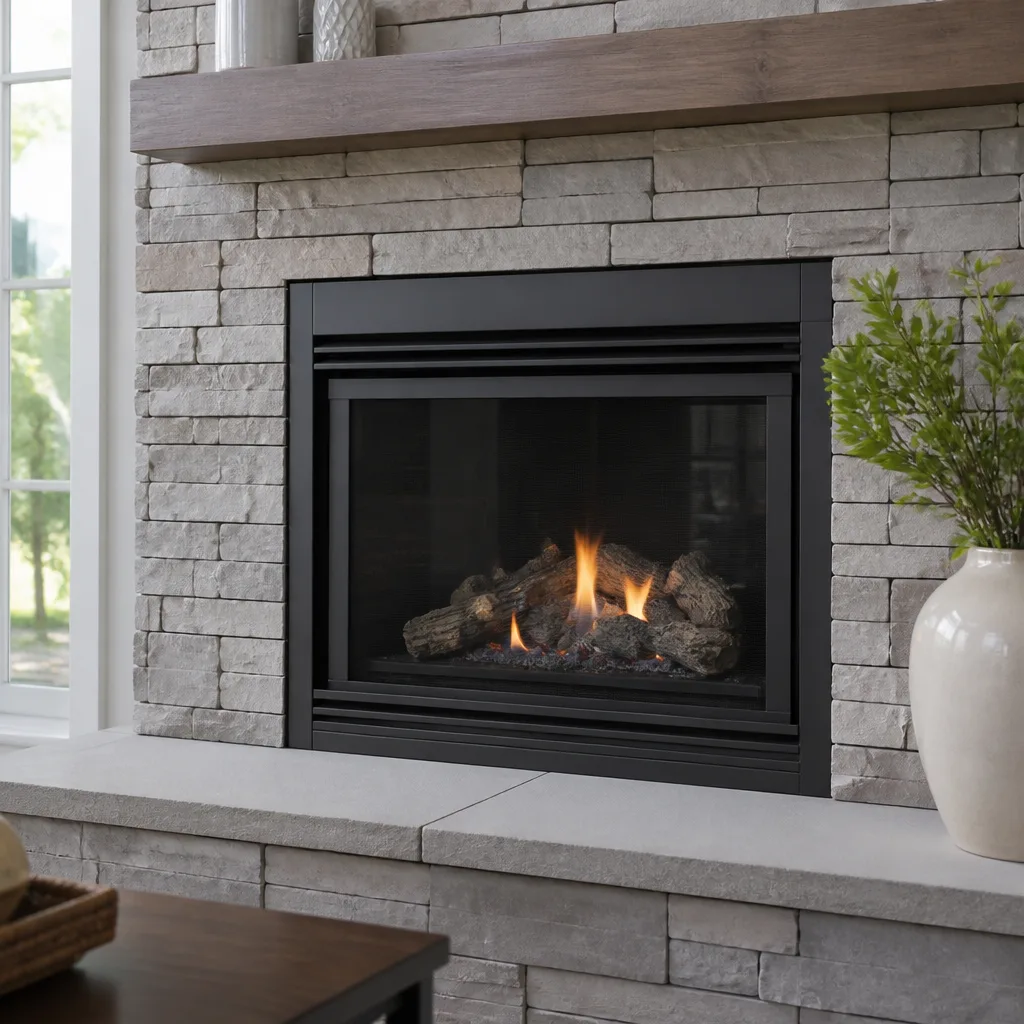
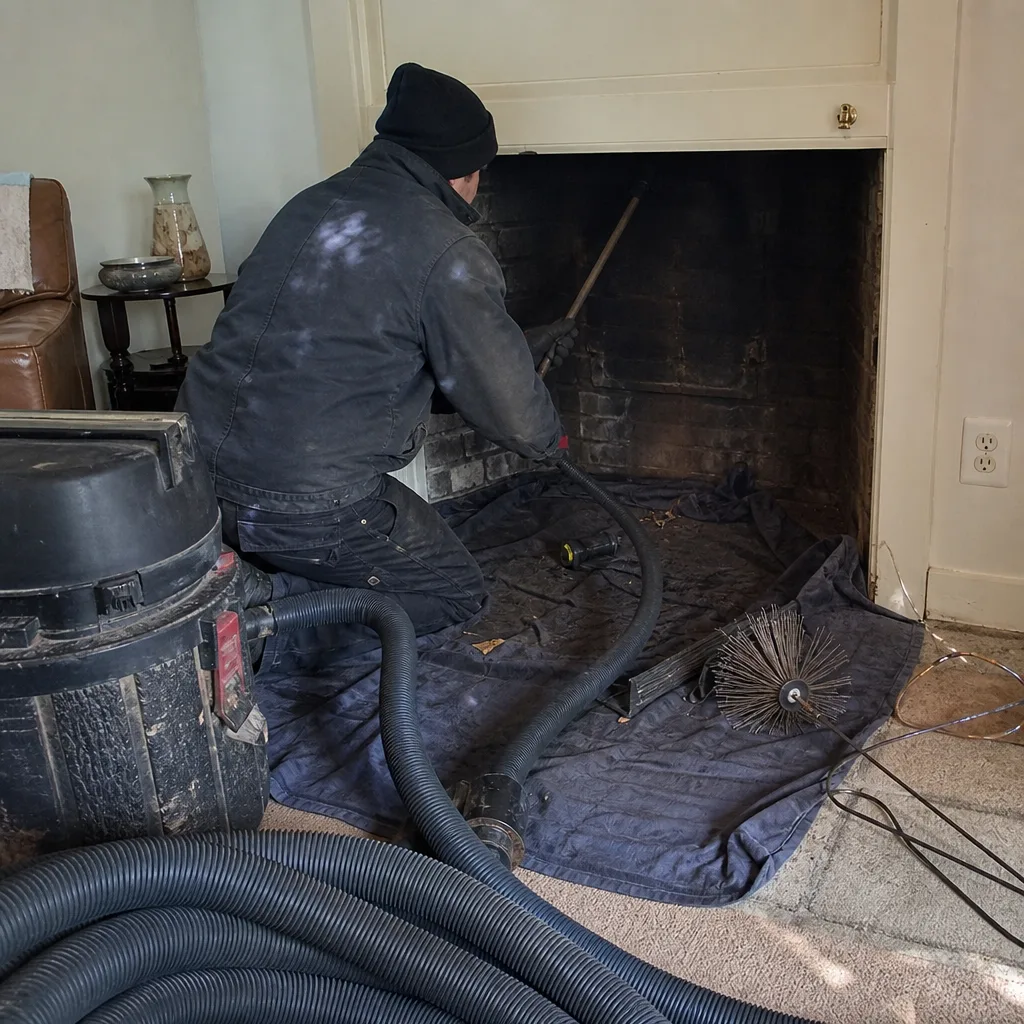 Before
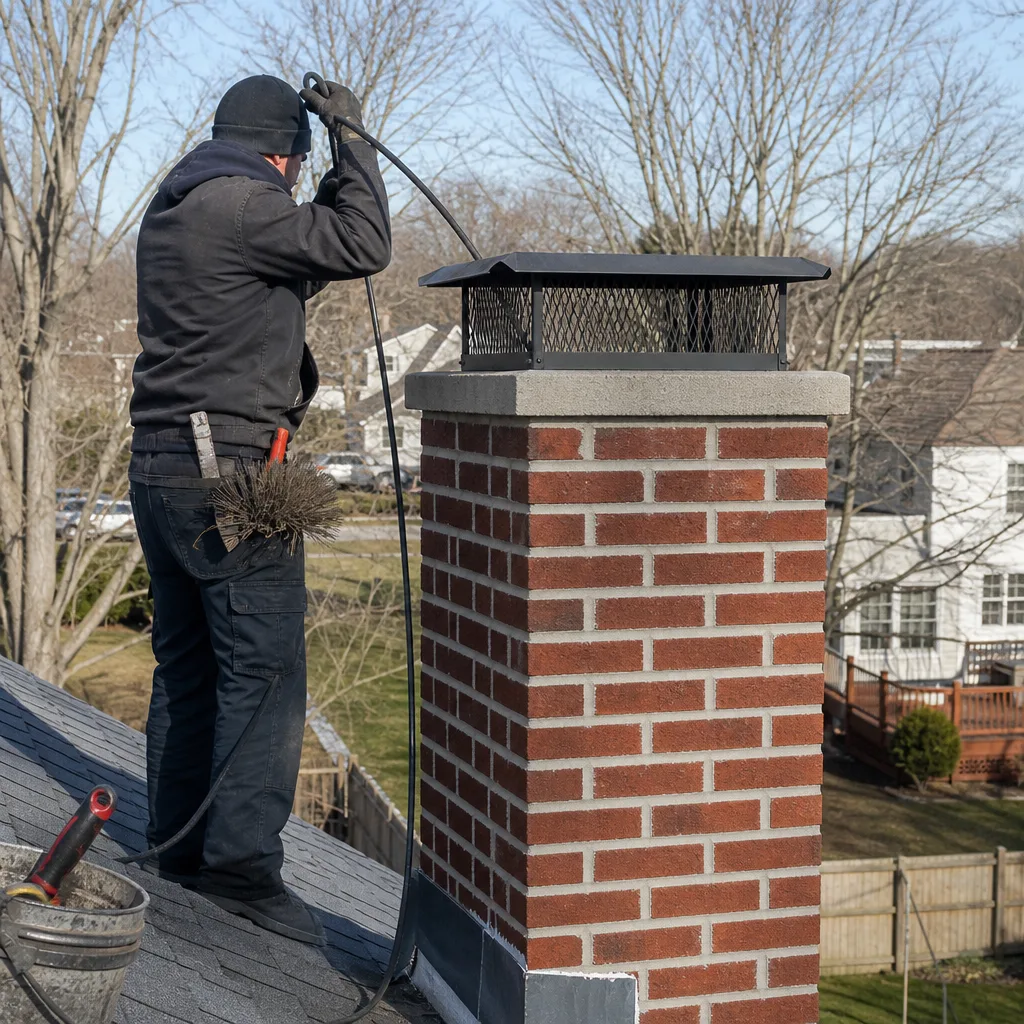 After
After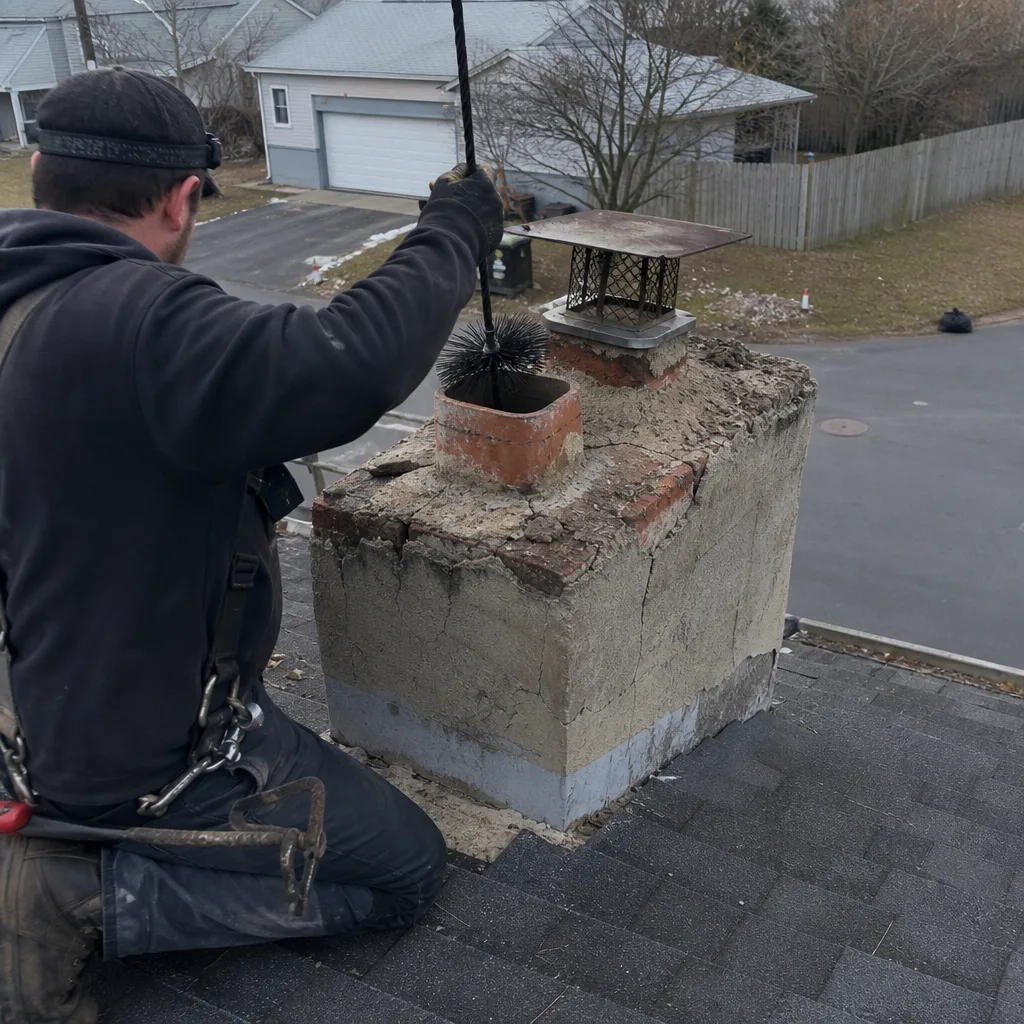 Before
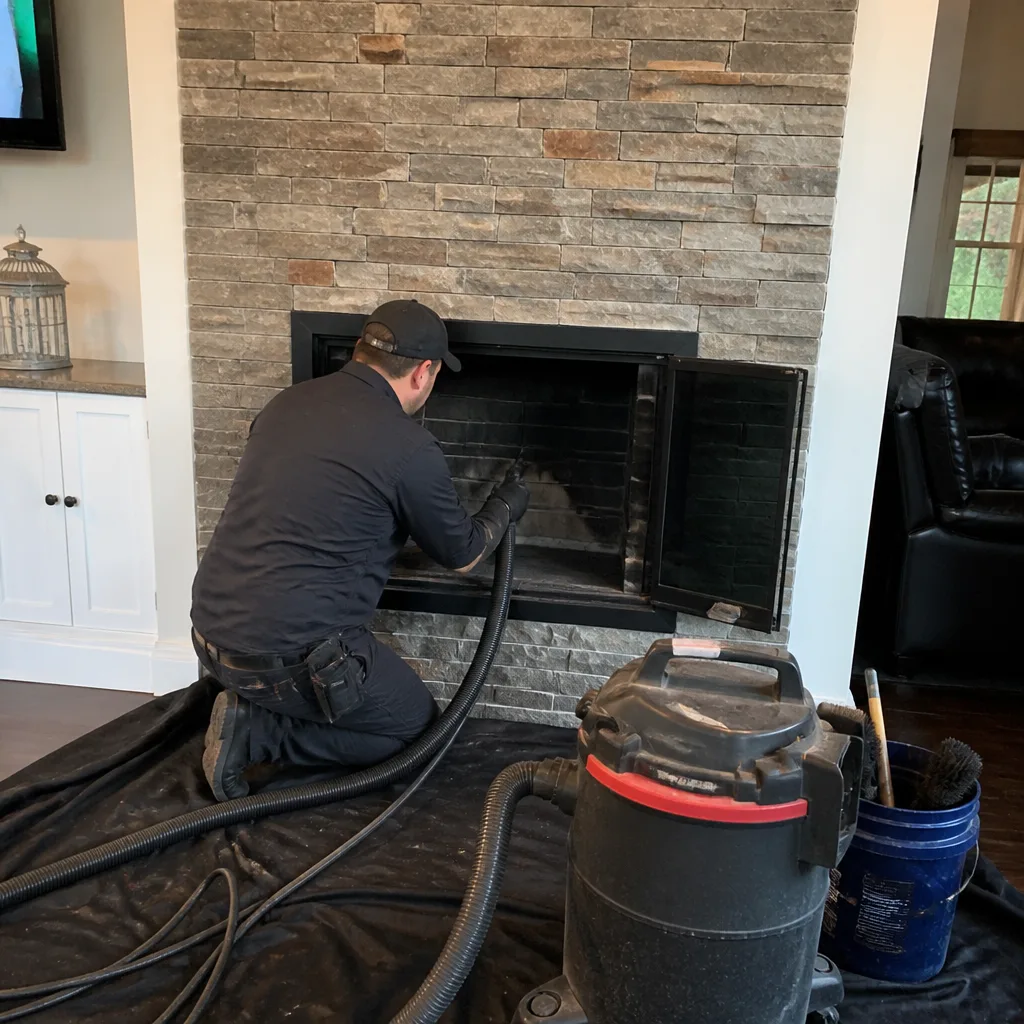 After
After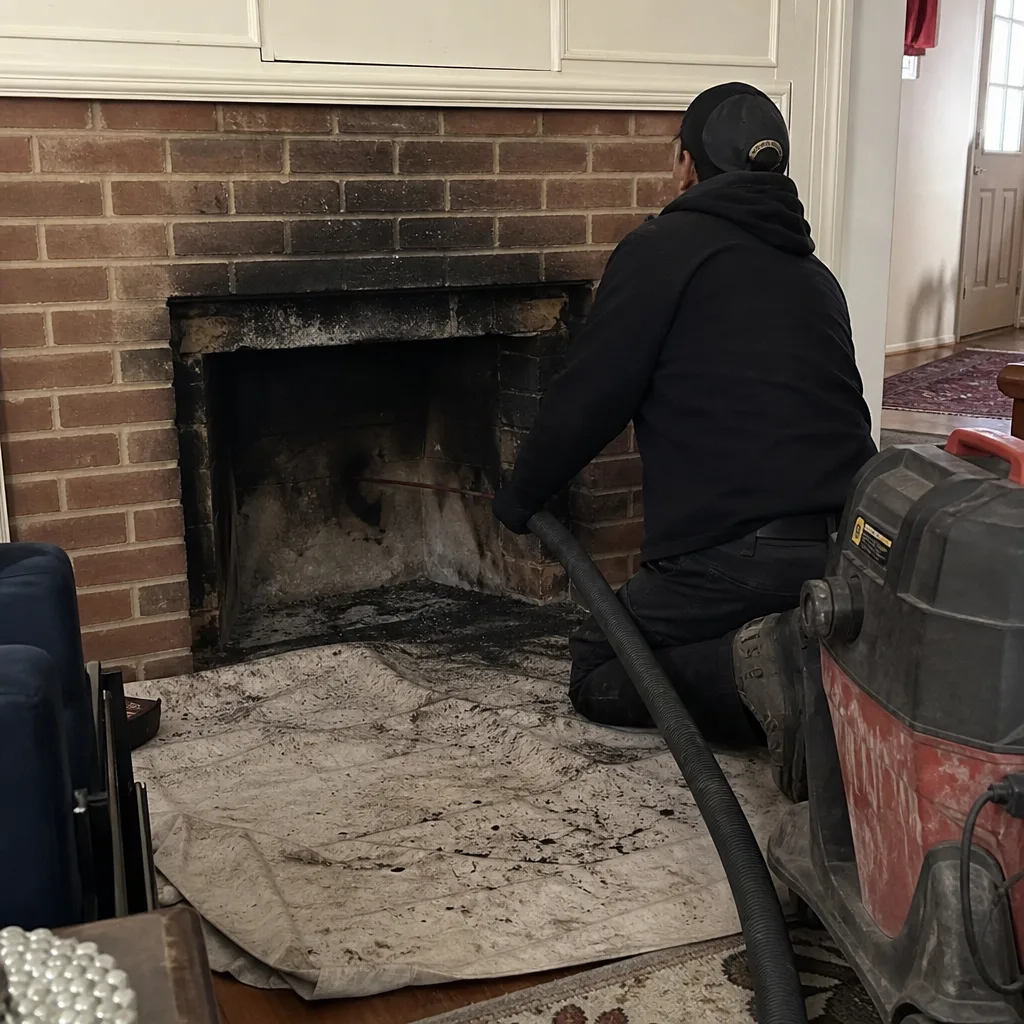 Before
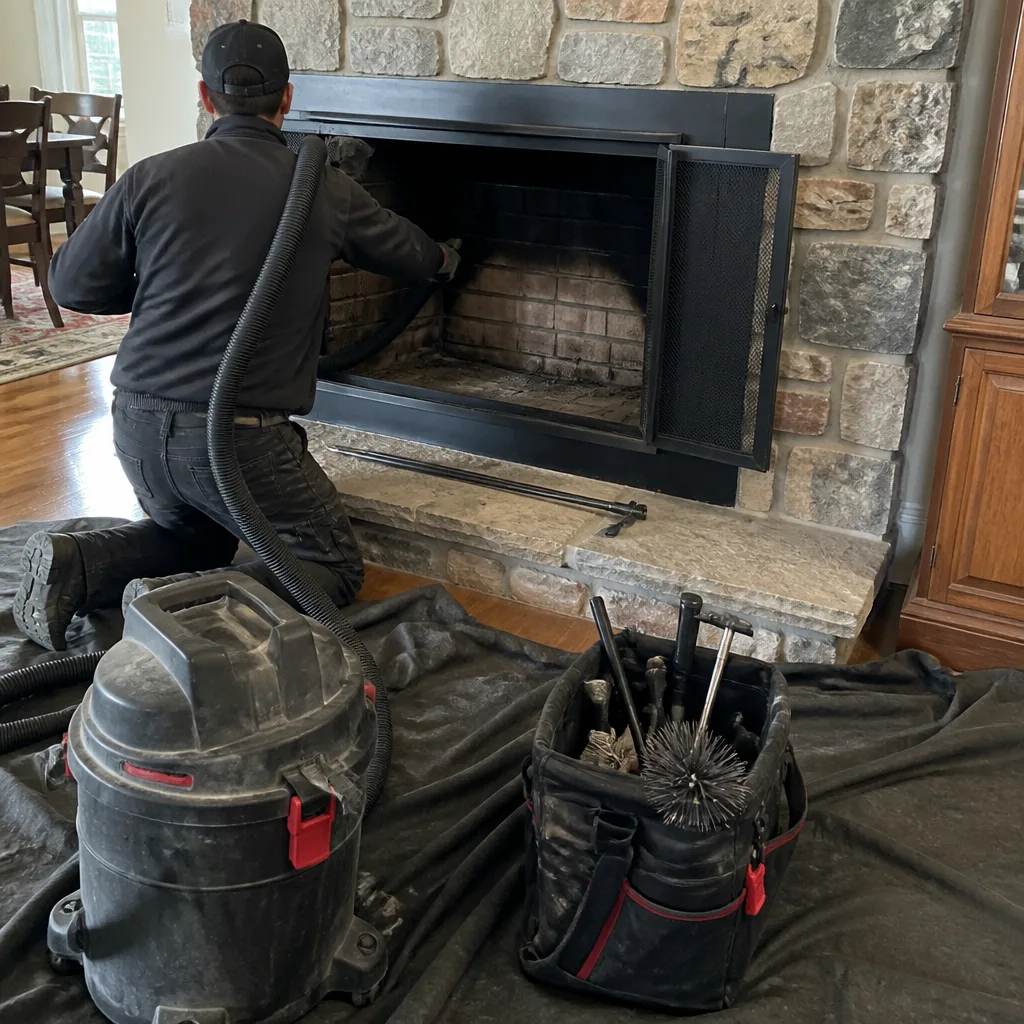 After
AfterThe Complete Guide to Chimney Cleaning in Leesburg
Every year, national fire statistics get quoted back to Leesburg homeowners like gospel. But here’s what those averages leave out: Loudoun County’s Piedmont clay soils and relentless freeze-thaw cycles crack chimney crowns and compromise liner seals faster than almost anywhere else in the mid-Atlantic. We’ve pulled apart “clean” chimneys in Leesburg neighborhoods from Chimney Cleaning & Sweep in Leesburg that passed a basic visual check yet harbored gaping mortar failures invisible from the hearth. This guide explains what chimney cleaning actually means here, why local conditions rewrite the maintenance timeline, and how to read an inspection report like someone who intends to stay in their house another twenty years.
Quick Answer
A proper chimney cleaning in Leesburg removes combustible creosote deposits, clears the smoke shelf and firebox of debris, and includes a camera inspection of the flue liner to catch freeze-thaw damage before it becomes a fire or carbon monoxide hazard. Most Leesburg homes need this service annually if wood is burned regularly, or every two years for occasional use, with a Level 2 inspection recommended after any hard winter or before buying a home. Expect the process to take 45-90 minutes for a standard sweep, with documented photo evidence provided afterward.
Table of Contents
- Why Leesburg Chimneys Fail Differently Than the National Average
- What a Complete Chimney Cleaning Actually Includes
- CSIA Inspection Levels Explained: Which One Your Leesburg Home Needs
- How to Read Your Post-Cleaning Inspection Report
- How Local Wood-Burning Habits Change Creosote and Cleaning Methods
- Chimney Cleaning Costs in Leesburg: What to Expect
- The Real Maintenance Timeline for Leesburg Homes
- Common Mistakes to Avoid
- When to Call a Professional
- Frequently Asked Questions
Why Leesburg Chimneys Fail Differently Than the National Average
The mid-Atlantic climate gets treated as one uniform zone in most chimney guides. It isn’t. Leesburg sits at the western edge of the Piedmont, where clay-heavy soils expand and contract dramatically with moisture changes, and where winter temperatures swing from single digits to the fifties within a week. That thermal whiplash matters more than most homeowners realize.
Here’s the mechanism: water enters micro-cracks in the chimney crown during a January thaw, freezes hard when the next cold front arrives, and wedges those cracks wider. By March, a crown that looked sound in October can be shedding pieces into the flue. The liner, meanwhile, undergoes its own stress cycle. Metal liners contract in the cold, expand in brief warm spells, and the flex points, especially at the thimble and collar, work-harden faster than manufacturers’ national lifespan estimates predict.
In our experience across Leesburg, from the historic districts near the courthouse to the newer developments off Route 15, this accelerated degradation shows up in three predictable patterns:
- Crown cracking in 8-12 years instead of the 15-20 year national expectation, especially on chimneys with poured concrete crowns rather than cast-in-place caps
- Liner separation at the thimble after 6-10 years in homes that burn regularly through winter, compared to 12-15 years in more stable climates
- Smoke shelf accumulation that exceeds CSIA standards within a single burning season, due to the combination of dense local hardwoods and the humidity that keeps combustion incomplete
The humidity is the overlooked factor. Leesburg’s summer dew points regularly hit the upper sixties, and that moisture doesn’t fully evacuate from masonry systems before fall burning begins. Damp flues condense more creosote. Damp firebrick spalls faster. A chimney that reads “clean” by visual standard can be compromised by moisture-driven chemistry that a camera inspection reveals.
This is why we document everything. Hearthstone Chimney Co. home has served this market for over 42 years, and we’ve learned that Leesburg chimneys punish assumptions. The freeze-thaw cycle here doesn’t care what the national manual says.
What a Complete Chimney Cleaning Actually Includes
There’s a gap between what homeowners picture when they hear “chimney sweep” and what the job actually requires. The cartoon image, brush up the flue, misses most of what determines whether your chimney is safe to use. In Leesburg, where local conditions accelerate hidden damage, that gap can be dangerous.
A complete cleaning, done to the standard we apply on every job, follows this sequence:
- Exterior assessment. We examine the crown, cap, flashing, and visible masonry for freeze-thaw damage, vegetation intrusion, or spalling before we touch the interior. If the crown is cracked, cleaning the flue without addressing it is pointless.
- Firebox preparation and protection. Drop cloths, HEPA vacuum setup, and visual inspection of the firebox floor, sidewalls, and damper assembly. We note any cracked or missing firebrick, which is common in Leesburg homes with older Rumford-style fireplaces.
- Smoke shelf and damper cleaning. This is where low-bid services often cut corners. The smoke shelf, the flat area behind the damper, collects fallen debris, deteriorated mortar, and creosote that bypasses the main flue. It must be manually scraped and vacuumed. A dirty smoke shelf is a fire hazard even if the flue above looks clean.
- Flue sweeping with appropriate tools. Polypropylene brushes for metal liners, natural bristle for unlined masonry, rotary systems for glazed creosote. The tool choice matters. Wrong brush, wrong damage.
- Debris removal and HEPA vacuuming. All material removed from the system is collected; nothing falls into your firebox or living space.
- Level 2 camera inspection. This is non-negotiable for us. A high-resolution camera travels the full flue length, documenting liner condition, mortar joint integrity, and any obstructions. You see the photos. We explain what they mean in plain English.
- Written report with photo documentation. Not a checklist. A verdict: what’s sound, what’s worn, what needs attention now, what can wait, and why.
Low-bid competitors in the Leesburg market routinely skip steps 3, 6, and 7. They brush the flue, vacuum the hearth, and hand you a carbon-copy receipt. The smoke shelf remains packed with combustible debris. The cracked liner goes undetected until it fails. We’ve been called in after these “cleanings” to find chimneys that were technically swept and genuinely unsafe.
Our Chimney Repair in Leesburg page details what happens when cleaning reveals damage that needs fixing. The point is: cleaning and inspection are inseparable. One without the other is half a job.
CSIA Inspection Levels Explained: Which One Your Leesburg Home Needs
The Chimney Safety Institute of America defines three inspection levels, and most homeowners have no idea which applies to their situation-our How to Hire a Chimney Cleaning Contractor in Leesburg: A Step-by-Step Guide covers what to ask about this. This matters in Leesburg because our climate conditions push chimneys toward Level 2 territory faster than milder regions.
Level 1 is a visual examination of readily accessible portions of the chimney exterior, interior, and connecting appliances. No tools, no climbing, no camera. It’s appropriate for chimneys that have been regularly maintained, haven’t changed in use, and aren’t experiencing problems. In Leesburg, given our freeze-thaw stress, we consider Level 1 adequate only for chimneys inspected within the previous 12 months with no interim issues.
Level 2 adds a camera inspection of the flue interior, examination of accessible attics and crawl spaces, and assessment of clearances and combustibles. It’s required by NFPA 211 when a property changes hands, after a chimney fire or malfunction, or when the appliance or fuel type changes. In our professional judgment, Leesburg chimneys that have endured a hard winter, or any chimney over 15 years old, should receive Level 2 regardless of apparent condition. The camera finds what eyes cannot.
Level 3 involves demolition of building materials to access concealed areas. It’s reserved for suspected serious hazards that cannot be evaluated otherwise. We’ve initiated Level 3 inspections twice in Leesburg, both after structural movement in historic homes revealed compromised chimney foundations.
Here’s our practical guidance for Leesburg homeowners:
| Situation | Recommended Level | Why |
|---|---|---|
| Annual maintenance, no changes, previous Level 2 within 2 years | Level 1 with camera verification | Baseline monitoring; camera confirms no hidden progression |
| After hard winter (multiple freeze-thaw cycles) | Level 2 | Crown and liner stress requires internal documentation |
| Buying or selling home in Leesburg | Level 2 (mandatory per NFPA 211) | Protects both parties; reveals latent freeze-thaw damage |
| Chimney fire, lightning strike, or earthquake | Level 2 minimum, Level 3 if structural damage suspected | Thermal or physical shock may have compromised concealed components |
| New appliance installation or fuel change | Level 2 | Verifies compatibility and clearances |
| Visible leaning, settlement cracks, or water infiltration | Level 2 or 3 | Piedmont clay soils can undermine foundations; structural evaluation needed |
We perform Level 2 inspections as standard on every cleaning because Leesburg conditions warrant it. The camera doesn’t add significant time, but it eliminates significant doubt. Photos you can see, a plain-English verdict. That’s the Keystone Standard.
How to Read Your Post-Cleaning Inspection Report
A proper report should answer three questions: What’s safe now? What needs attention? What’s the timeline? Anything less is a receipt, not a verdict.
After our cleanings, Leesburg homeowners receive a documented report with dated photos from the camera inspection. Here’s how to evaluate what you’re looking at, whether from us or any provider:
Photo documentation of the full flue length. You should see clear images of the liner from top to bottom, not selective shots. Look for consistent lighting and focus; blurry or partial images suggest rushed work. We number our photos to correspond with flue segments, so you can follow the camera’s path.
Liner condition classification. The report should state clearly whether the liner is sound, showing localized wear, or compromised. “Compromised” means something specific: visible cracks, gaps at joints, corrosion spots, or deformation. Vague language like “fair condition” without photographic evidence is a warning sign.
Mortar joint assessment. For unlined masonry chimneys, which remain common in Leesburg’s pre-1970 housing stock, the camera reveals mortar joint integrity between flue tiles. Eroded joints allow gases and sparks to reach surrounding masonry. The report should note any joint erosion and its location.
Creosote classification and measurement. CSIA recognizes three creosote stages: Stage 1 (sooty, easily brushed), Stage 2 (shiny flakes, requires rotary tools), and Stage 3 (glazed, tar-like, may require chemical treatment). The report should state what was present and what was removed. In Leesburg, we see more Stage 2-3 creosote than national averages predict, due to oak’s burning characteristics and our humidity.
Crown, cap, and flashing evaluation. Exterior photos with annotations. Cracks should be measured or described by extent, not just noted as “cracked.”
Prioritized recommendations. This is where many reports fail. Everything gets marked “recommended” with no distinction between urgent safety issues, preventive maintenance, and cosmetic concerns. Our reports separate these explicitly: “Address before next use,” “Address within 12 months,” and “Monitor at next service.”
Written estimate for any recommended work. No-hassle upfront pricing. The number on the estimate is the number on the invoice. If a provider won’t put a price to a recommendation, ask why.
The report is your evidence. If you need a second opinion, our Free Second Opinion on any written estimate applies, and you can find more guides & resources on our blog to stay informed. Bring us another company’s report; we’ll review it honestly. Sometimes the work is necessary and fairly priced. Sometimes it isn’t. An informed homeowner is our best customer.
How Local Wood-Burning Habits Change Creosote and Cleaning Methods
Leesburg homeowners burn what the local forests and firewood suppliers provide: primarily oak, with mixed hardwoods (hickory, maple, ash) and occasional pine from property maintenance. Each species produces distinct combustion byproducts, and understanding this changes how you approach cleaning.
Oak dominates the local firewood market for good reason. It burns hot and long when properly seasoned. But oak’s high density and relatively low moisture content when green means it gets burned too soon, too often. Unseasoned oak smolders, producing thick, acidic smoke that condenses as Stage 2-3 creosote. In Leesburg’s humid climate, “seasoned” wood from outdoor stacks often carries 25-30% moisture, well above the 20% maximum for clean burning. We’ve cleaned chimneys with dangerous glaze deposits from nothing but improperly seasoned oak.
Mixed hardwoods generally burn cleaner when dry, but the variability matters. Hickory burns hottest and fastest, maple steady, ash clean even slightly green. Homeowners who burn whatever’s available without adjusting air intake or loading patterns create inconsistent combustion temperatures, and inconsistent temperatures produce more creosote than steady, hot fires.
Pine and softwood gets a bad reputation that’s partially deserved. It does produce more creosote by volume because of its resin content, but the creosote tends to be softer, more sooty, and easier to remove. The real problem is rapid accumulation in a flue sized for hardwood use, or mixing softwood with cold starts that prevent complete combustion.
Our cleaning methods adapt to what we find:
- Stage 1 creosote: Standard polypropylene or wire brush, effective removal with minimal liner contact stress
- Stage 2 flaking: Rotary cleaning system with chains or whips, matching tool diameter to flue size precisely
- Stage 3 glaze: Chemical powder treatment applied during cleaning, followed by controlled hot burn to convert glaze to brushable residue, with return visit if necessary
We source professional-grade materials from Olympia Chimney, Famco, and Copperfield for liner and cap work that follows cleaning. No builder-grade substitutes. The liner we install after removing glazed creosote needs to withstand the same conditions that created the problem.
The practical advice for Leesburg burners: buy firewood a year ahead, stack it covered with open sides for airflow, and test with a moisture meter before burning. The $20 meter prevents the $300+ cleaning that glazed creosote requires. Fireplace Services in Leesburg can also evaluate your damper and air intake setup for more complete combustion.
Chimney Cleaning Costs in Leesburg: What to Expect
Chimney cleaning prices in the Leesburg market vary widely because the service described as “cleaning” varies widely. Understanding what drives cost helps you compare estimates honestly.
Standard cleaning with Level 2 inspection: $189-$289 for most Leesburg homes with a single flue, accessible roof, and no extraordinary creosote buildup. This includes the full seven-step process described above, photo documentation, and written report.
Heavily glazed creosote requiring chemical treatment: Add $75-$150 for powder application and follow-up burn monitoring. Stage 3 glaze cannot be brushed away; it must be chemically altered first.
Additional flues: $89-$149 per additional flue on the same visit. Many Leesburg homes have separate flues for fireplace and furnace or water heater.
Difficult access: Steep pitches, multi-story heights, or obstacles that require additional safety equipment may add $50-$100. We assess this during scheduling, not as a surprise on arrival.
What low-bid services charge and what they skip: $79-$129 “specials” typically cover a brush run and basic vacuuming, no camera, no smoke shelf work, no written report. The economics don’t work otherwise. We’ve responded to homes in Leesburg neighborhoods where a $99 sweep missed a separated liner that a proper inspection would have caught months earlier.
Our pricing is no-hassle upfront. The number on the estimate is the number on the invoice. We also offer a $89 Seasonal Tune-Up that includes inspection and basic maintenance for gas fireplaces and inserts, which is separate from wood-burning chimney cleaning.
Standing offers that apply:
- $50 Off Any Repair Over $250
- Free Second Opinion on any written estimate
- Permanent 5% Senior and Veteran discount
Call (571) 701-7519 for an exact quote. Estimates are free, and a live person answers every call, 24 hours a day, 7 days a week.
The Real Maintenance Timeline for Leesburg Homes
National guidance says “inspect annually, clean as needed.” In Leesburg, we refine that based on what we’ve observed across four decades of local service, as detailed in our Seasonal Chimney Cleaning Care for Leesburg: Year-Round Homeowner’s Guide.
Primary wood-burning fireplace, used regularly (3+ times weekly during season): Annual cleaning with Level 2 inspection. The combination of dense hardwoods, humidity, and freeze-thaw stress means creosote accumulates faster and liner degradation accelerates. Waiting two years risks Stage 3 glaze and undetected crown damage.
Occasional use (1-2 times weekly, holiday weekends): Clean every 18-24 months, but inspect annually. The inspection catches freeze-thaw damage even when creosote buildup is minimal. We’ve found significant crown cracks in chimneys that had been burned fewer than ten times.
Gas fireplace or insert: Annual inspection of venting, burner, and safety controls. No creosote, but moisture and corrosion still affect metal venting, and ceramic logs degrade. Our $89 Seasonal Tune-Up covers this.
Furnace or water heater flue: Inspect annually, clean as indicated by inspection. These flues don’t produce creosote, but they can suffer liner damage, blockages from debris or animal intrusion, and corrosion from condensing appliances. The freeze-thaw cycle affects them too.
After significant weather events: Any chimney exposed to lightning, earthquake, or severe ice accumulation should receive Level 2 inspection before next use. The 2016 ice storm and 2019 microburst both caused damage we found months later, only because homeowners scheduled inspection for unrelated reasons.
Before buying or selling: Level 2 inspection is non-negotiable. In Leesburg’s competitive real estate market, chimney issues discovered during buyer inspection derail transactions or trigger renegotiation. Sellers who inspect first price accurately; buyers who inspect know what they’re accepting.
The timeline that works is the one that accounts for local conditions, not national averages. We’ve been in Leesburg long enough to know the difference.
Common Mistakes to Avoid
- Hiring based on price alone. The $99 sweep that skips the camera and smoke shelf leaves you with false confidence and hidden hazards. In Leesburg’s climate, incomplete cleaning is worse than no cleaning because it masks progressive damage.
- Assuming a clean flue means a sound chimney. Creosote removal and structural integrity are separate issues. We’ve cleaned chimneys with pristine flues and crumbling crowns that would have failed within the next freeze-thaw cycle.
- Burning unseasoned wood because it’s convenient. That oak delivered in October and burned in November is producing glazed creosote by January. The moisture meter is cheaper than the remediation.
- Ignoring the smoke shelf. Homeowners who DIY brush the flue from below often never address the smoke shelf, where the most dangerous accumulation frequently occurs. It’s inaccessible without proper tools and positioning.
- Skipping inspection after a mild winter. Leesburg’s freeze-thaw cycles can be severe even in “mild” winters with few sub-zero days. The number of freeze-thaw events matters more than the lowest temperature reached.
- Accepting verbal reports without photos. A verbal “looks good” without documentation cannot be verified, compared, or referenced later. Demand photos you can see and a written verdict you can keep.
- Delaying crown or flashing repair to “save money.” Small crown cracks admitted to water become liner failures and interior damage that cost ten times more. Addressed promptly, crown repair is maintenance. Delayed, it becomes reconstruction.
When to Call a Professional
Certain situations require immediate professional evaluation, not scheduling convenience. Call before using the chimney if you notice: visible cracks or pieces missing from the crown or exterior masonry; water stains on walls or ceiling near the chimney; a strong odor of creosote or smoke when the fireplace is not in use; debris or animal nesting material in the firebox; or any smoke spillage into the room during operation.
Carbon monoxide is the silent risk. A compromised liner or blocked flue can vent exhaust into living spaces without visible warning. If your CO detector alarms and you cannot identify a source, treat the chimney as suspect until inspected.
Hearthstone Chimney Co. offers free estimates in Leesburg. Our background-checked, uniformed technicians complete most jobs in a single visit, and a live person answers the phone at (571) 701-7519, every hour of every day. We’ll be there when we say. Done right, and we stand behind it.
Frequently Asked Questions
A complete chimney cleaning with Level 2 camera inspection in Leesburg typically runs $189-$289 for a single flue, depending on creosote buildup and access difficulty. Heavily glazed creosote requiring chemical treatment adds $75-$150. Call (571) 701-7519 for an exact quote - estimates are free, and a live person answers every call.
A legitimate liner recommendation should be supported by camera photos you can see, with specific damage described: cracks, gaps, corrosion, or separation at joints. At Hearthstone, nothing is recommended without photo evidence, and we’ll plainly tell you when work can safely wait. Our Free Second Opinion on any written estimate applies if you want verification. In Leesburg’s freeze-thaw climate, liners do fail faster than national averages, but that fact doesn’t justify replacement without proof.
Annual sweeping is recommended for regular wood burners; every 18-24 months for occasional use, with annual inspection regardless. Leesburg’s humidity and freeze-thaw cycles accelerate creosote accumulation and liner stress beyond what milder climates experience. Gas fireplaces need annual inspection of venting and controls, though they don’t require creosote removal.
Skipped cleaning allows creosote to accumulate, increasing fire risk and potentially obstructing the flue. In Leesburg’s climate, the additional factor is moisture-driven degradation: damp creosote is more acidic, accelerating liner corrosion and masonry spalling. A chimney that would have needed maintenance in year five may need reconstruction in year eight. The cost of deferred maintenance compounds.
Level 1 is visual examination of accessible areas, appropriate for chimneys with no changes or problems. Level 2 adds camera inspection of the flue interior and examination of attics and crawl spaces, required for property transactions, after damage, or when conditions warrant. In Leesburg, we recommend Level 2 for any chimney over 15 years old or after a hard winter, given our accelerated freeze-thaw damage.
Basic flue brushing is within capable homeowners’ reach, but it doesn’t replace professional evaluation. The smoke shelf, liner condition, crown integrity, and proper draft testing require tools and training most homeowners don’t have. In our experience, DIY cleaning in Leesburg often addresses visible soot while missing the moisture-driven damage our climate produces. For safety-critical components, a trained professional is the sound choice.
Summer odor usually indicates creosote buildup combined with humidity entering the flue. The moisture reactivates acidic compounds in the deposits, producing a sharp, smoky smell that permeates the house when the damper is open or leaky. Cleaning removes the source; a proper cap and damper seal prevent recurrence. In Leesburg’s humid summers, this is a common call we receive in July and August.
The Bottom Line
Chimney cleaning in Leesburg is not a standardized commodity. The Piedmont clay soils, aggressive freeze-thaw cycles, and dense hardwood burning habits specific to this region create maintenance demands that national averages underestimate. A proper cleaning removes creosote and debris completely, includes camera documentation of liner condition, and produces a written verdict you can understand and verify. Anything less leaves you guessing about the safety of a system that vents fire and combustion gases through your home.
We’ve served Leesburg and surrounding communities for over 42 years. Our approach hasn’t changed: photos you can see, a plain-English verdict, no-hassle upfront pricing, and the 90-Day Done Right Promise in writing. If it’s not right, we make it right. No arguing. That’s the Keystone Standard.
Call (571) 701-7519 when you’re ready to schedule. A live person answers, 24 hours a day, 7 days a week. We’ll be there when we say.
Written by Russell Haines, Owner at Hearthstone Chimney Co., serving Leesburg since 2014.